

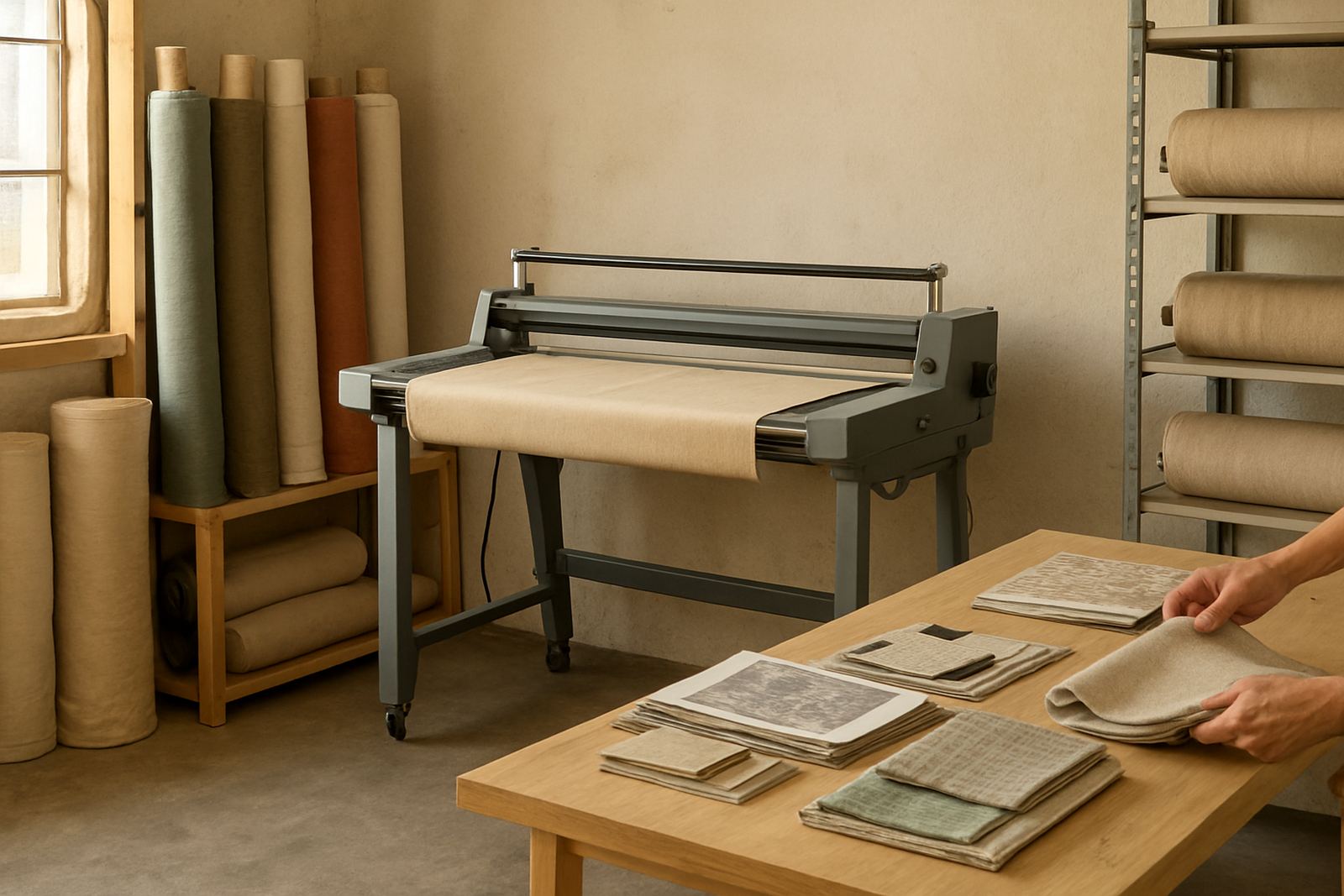
2011: a Ndabeni start with a clear purpose
Fabric Printers Studio began trading in 2011 from Ndabeni, where light industrial spaces, easy access to the M5 and nearby suppliers made sense for a fabric print business. The first jobs were small and direct, custom prints for people who needed curtain fabric, display fabric or one-off textile pieces without long waiting times.
From the start, the team understood that printed fabric had to do more than look good. It had to hold colour, handle sewing, and stand up to the conditions many South African homes and businesses deal with, including coastal humidity in Cape Town and the stop-start pressure of load-shedding. That early approach shaped the way the business still works today.
2012 to 2014: learning the details that matter
As orders started to grow, the team tightened the process around file checking, colour matching and repeat pattern setup. These are the details that can make or break a fabric job. A small shift in repeat or tone can change how curtains hang or how upholstery looks once it is fitted.
During these years the studio built its way of working around practical support, not just printing. Customers wanted answers on fabric choice, finishing, and how a design would behave once cut and sewn. The team started offering more guidance on metreage, sampling and what works for indoor use versus heavier commercial application.
- Artwork checks before print to reduce costly mistakes
- Strike-off sampling for colour and pattern approval
- Advice on suitable fabrics for curtains, flags and upholstery
- Careful packing so printed stock reaches clients in good condition
2015 to 2017: from one-off orders to repeat clients
By the middle of the decade, Fabric Printers Studio was handling a broader mix of work. Homeowners wanted custom curtains and feature fabric. Small businesses came in for branded textile pieces and short production runs. Designers and makers from Woodstock, Salt River and Observatory also started using the studio for repeated fabric supply.
This period marked an important shift from purely custom orders to steady repeat work. Once clients saw that their colours stayed consistent and the finishing was neat, they came back with new briefs. That trust was earned through ordinary things done properly, like keeping timelines realistic and making sure measurements were checked twice.
- More small batch printing for makers and interior projects
- Growing demand for fabric by the metre
- Closer work with local clients in Cape Town’s inner suburbs
- Increased focus on hemming and finishing for ready-to-use fabric
2018 to 2020: stronger production and wider reach
As the business matured, it added more structure to production and dispatch. Bulk print runs needed organised scheduling, especially when multiple customers were waiting on different fabrics, sizes and finishing requirements. The team also built a stronger process for packing and courier, which helped move fabric beyond Cape Town and into towns and cities across South Africa.
This was also the period when the studio became more useful to businesses that needed consistency across larger orders. Whether it was upholstery for a seating range, flags for an event, or fabric for retail resale, the business had to keep output steady and keep communication clear. There were no shortcuts, and that made a difference.
Operating from Ndabeni meant the studio could stay close to Cape Town’s manufacturing route while still serving clients in Century City, Montague Gardens and the CBD without delay. For many customers, that local base mattered because it made collection, checks and follow-up easier.
2021 to 2023: adapting to pressure and keeping quality steady
These years tested many South African businesses with changing costs, delivery pressure and irregular electricity supply. Fabric Printers Studio responded by planning production more carefully, protecting turnaround times where possible and keeping clients informed when schedules needed adjusting. That practical approach helped the business remain steady even when the environment around it shifted.
The team also became even more hands-on with fabric sourcing and production advice. Some clients arrived with exact specifications, others needed help choosing the right base fabric for the job. The studio’s role often moved beyond printing and into problem-solving, which suited the kind of work it was already doing.
- Better planning around power interruptions and production timing
- More support for trade customers and resellers
- Expanded courier handling for national orders
- Ongoing attention to colour consistency across repeat jobs
2024 to today: a Cape Town studio serving the whole country
Today Fabric Printers Studio works from Ndabeni as a Cape Town base with courier fabric sent nationwide. The business now serves private customers, trade clients and businesses that need custom fabric printing with a practical, reliable process behind it. From curtains to upholstery, repeat patterns to sampling, the service is built around the needs of the final product, not just the print stage.
The team around Managing Director Luvuyo Mbeki has grown into a focused group with clear roles. Anika van Wyk oversees production, Siyabonga Dlamini handles printing, Megan Naidoo supports sales, Charné Botha coordinates design, and Thabo Molefe manages dispatch and logistics. That structure helps the studio keep orders moving from first enquiry to packed courier bag without losing track of the details.
What has stayed consistent since 2011 is the way the business treats each order, whether it is a few metres for a home project or a larger run for commercial use. The work still comes down to accurate printing, neat finishing and proper care with every batch.
The habits that shaped the business and still guide it
Fabric Printers Studio did not grow by chasing volume alone. It grew by building habits that clients could rely on year after year. That includes checking artwork, matching colour properly, keeping communication direct and packing finished fabric carefully for delivery.
For customers in Ndabeni, Woodstock, Salt River, Observatory, Montague Gardens and Century City, that means a local team is available when a job needs attention. For customers elsewhere in South Africa, the courier process makes it possible to place orders without losing the benefit of a Cape Town production base.
- 2011: first year of trading in Ndabeni
- Mid 2010s: stronger sampling, repeat patterns and finishing
- Late 2010s: more bulk and trade work
- 2020s: wider national courier service with tighter production control
That is the story so far, a business that started small, learned the hard lessons early and kept improving without losing its practical focus.