Small retail batches for an Observatory sewing collective
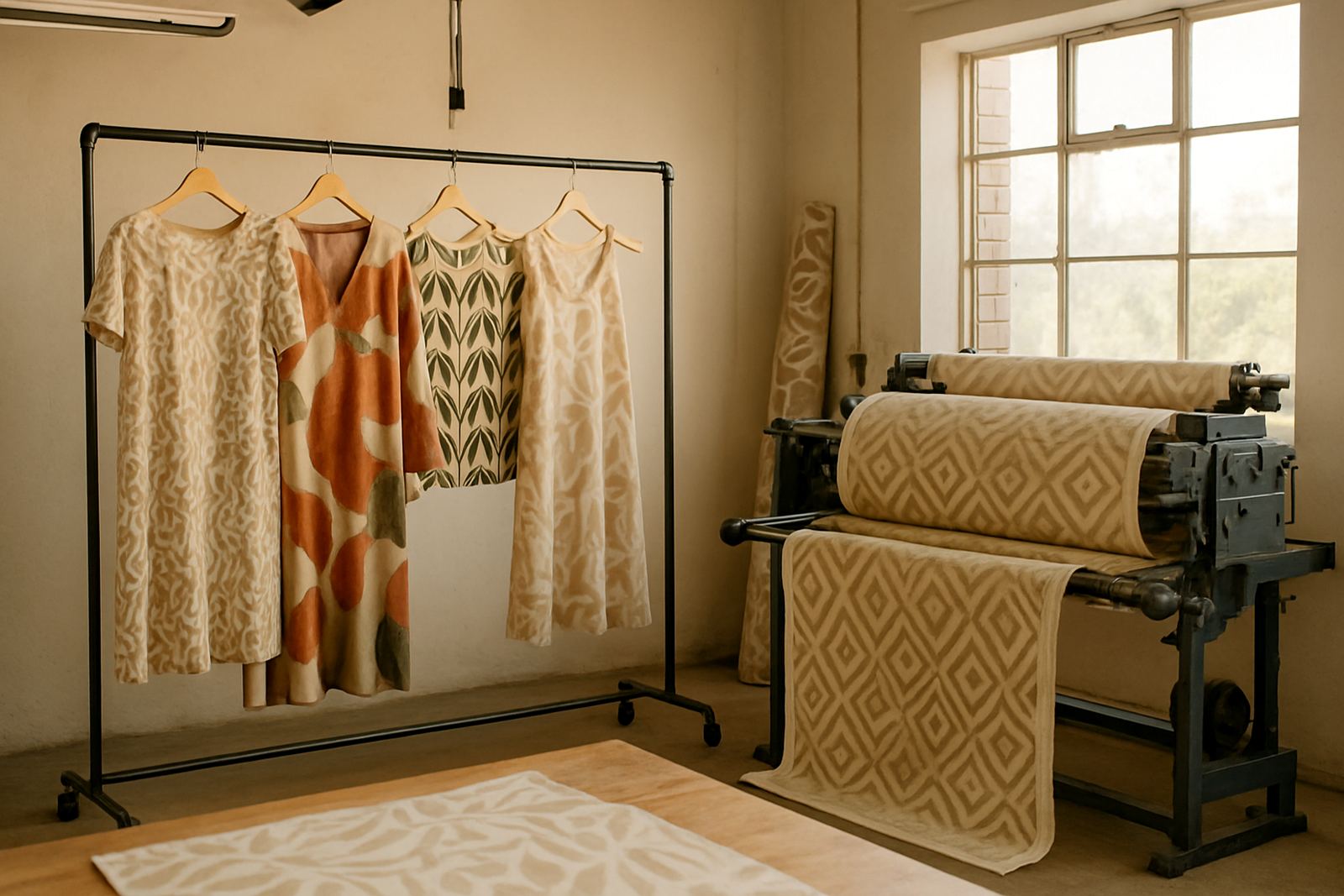
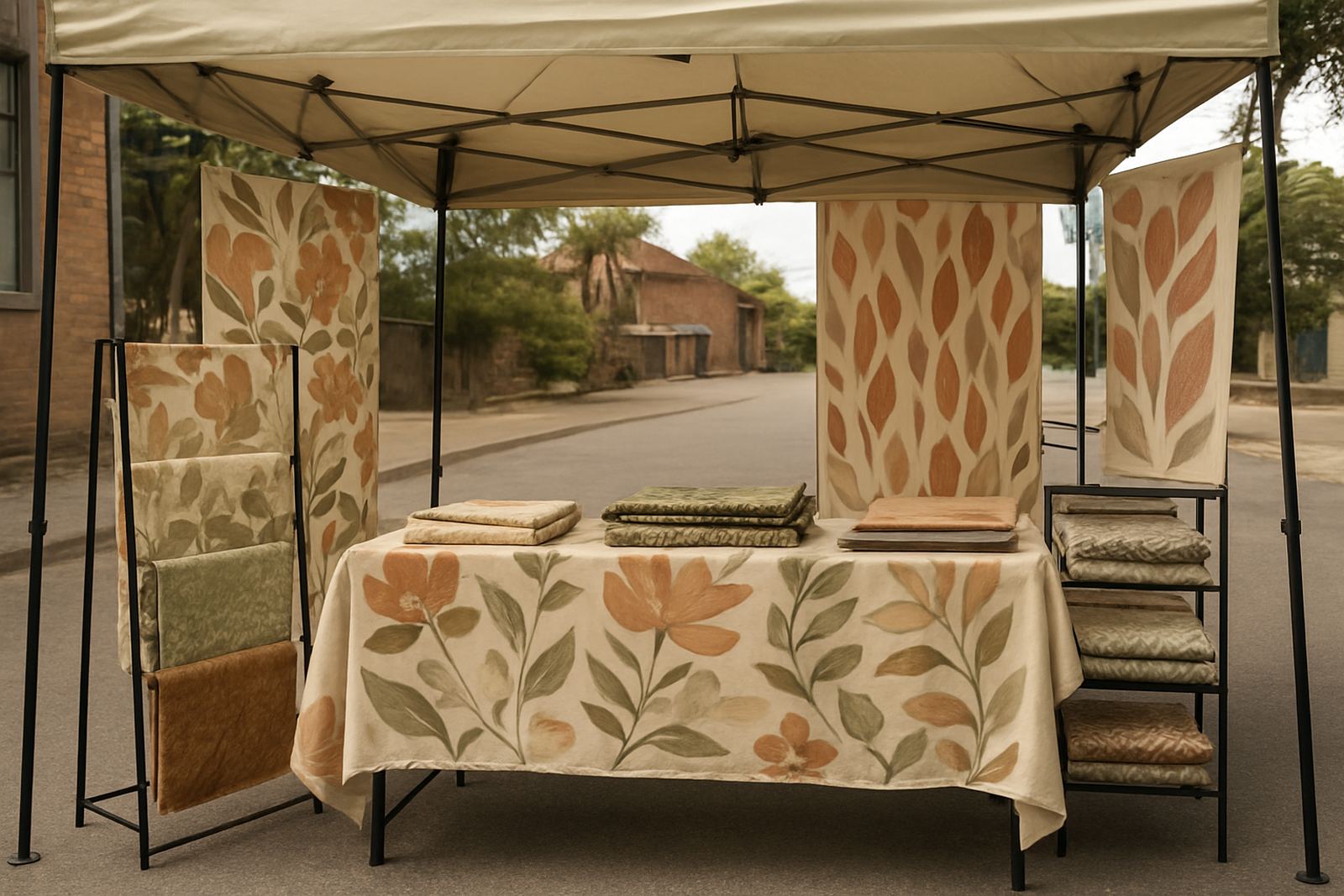
The client was a sewing co-op in Observatory, Cape Town making limited retail batches for local markets and independent shops. Their team needed printed fabric by the metre for skirts, shirts, soft accessories, and a few homeware pieces, all in short runs that could be reordered without the print shifting.
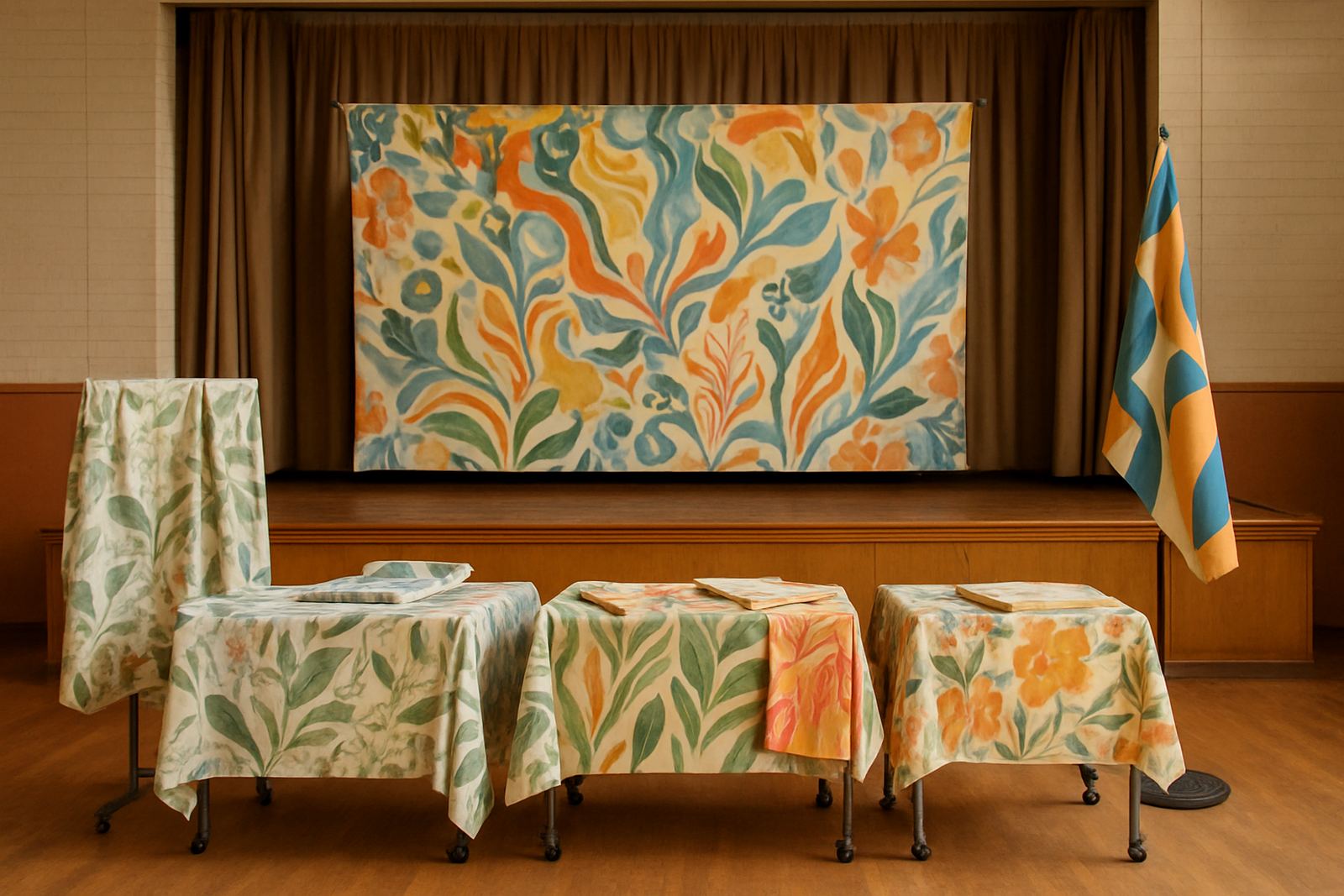
The brief was simple on paper but strict in practice. They wanted a patterned fabric that looked handmade in spirit but still held up to repeated cutting, sewing, and washing. Colour had to stay steady across each batch, and the repeat needed to work across different garment panels without awkward joins.
- Project type: fabric by the metre for small retail production
- Location: Observatory, Cape Town
- Run size: short batches, repeated over several order cycles
- Use cases: apparel, bags, light homeware
What the collective needed from the print run
Because the co-op was producing small retail batches, they could not afford large minimums or long waits for corrections. They also needed fabric that behaved properly when cut by different makers. That meant the pattern had to be mapped carefully and the fabric spec had to suit stitching, pressing, and packing.
We checked the artwork for repeat scale, edge continuity, and colour balance before printing. The collective was using different garment shapes, so we kept the layout flexible enough to allow for panels, facings, and bias cut details. We also looked at shrinkage expectations and how the fabric would handle normal home washing, since their customers were buying for everyday use not one-off display pieces.
- Artwork checked for repeat alignment and sizing
- Colour matched against reference swatches and digital proofs
- Fabric chosen for clean cutting and stable handling on domestic machines
- Finished with metre marks for easier workshop planning
Printing, sampling and file checking in Ndabeni
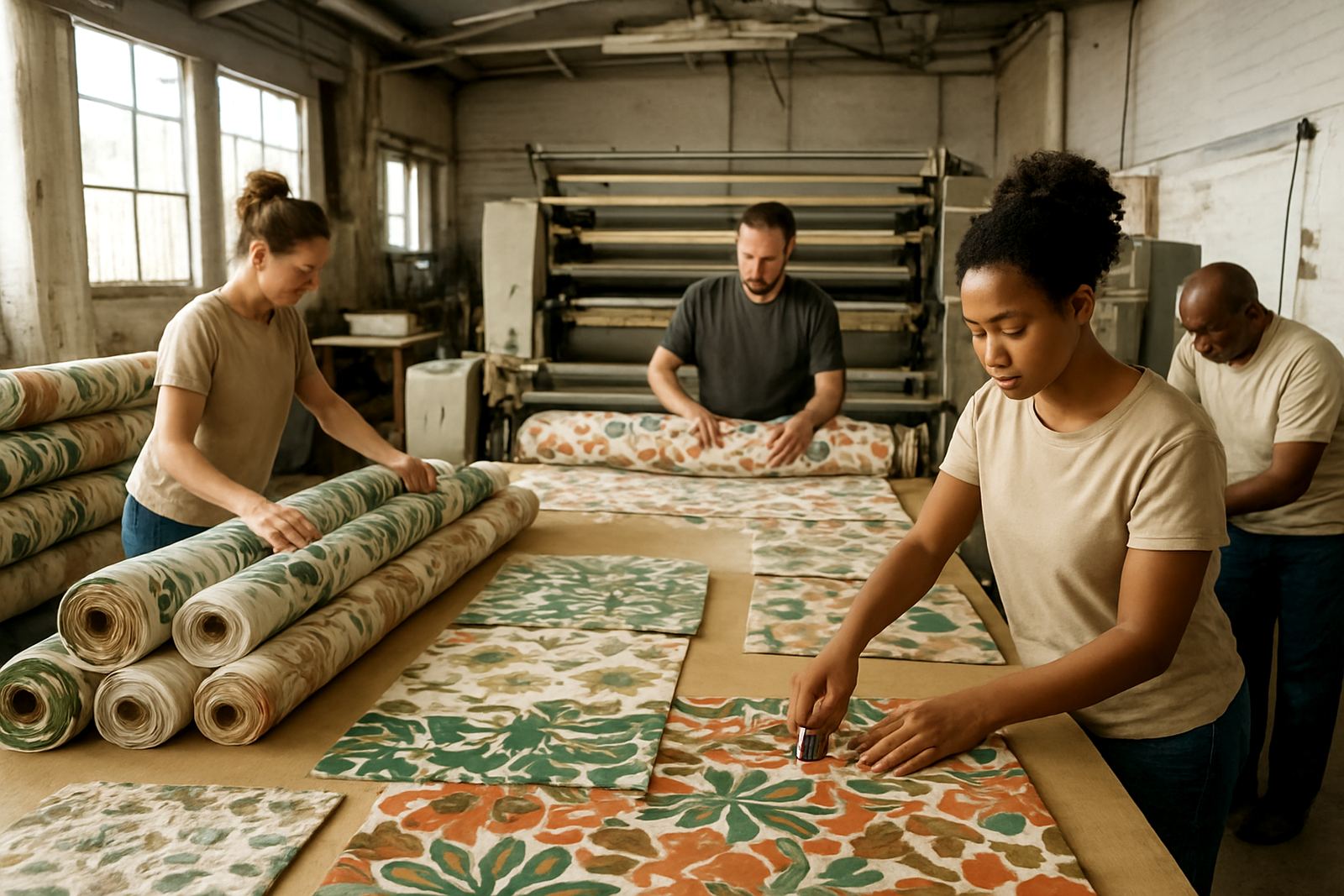
The work moved through our Ndabeni studio in stages, starting with file checking and repeat setup. Charné handled the design coordination, while Siyabonga prepared the print files and output settings. Anika oversaw production so the first metre matched the approved sample as closely as possible, especially on the lighter background tones that can shift if the screen or profile is off by even a small amount.
We supplied a strike-off sample first, then adjusted one accent colour before going ahead with the full run. That saved the client from carrying a batch with a tone they would have had to work around later. Once approved, the fabric was printed, cured, inspected, and cut to metre lengths for easy use in the sewing room.
The co-op preferred a practical finish, so we kept the surface neat and sewable with no heavy coating. It meant the fabric could be clipped, pinned, and fed through a machine without fighting the needle. In a busy workshop, that matters more than people think.
Couriering fabric from Cape Town to the sewing room
Once the print run was signed off, Thabo managed packing and dispatch. The metres were folded, labelled, and boxed for courier delivery from Cape Town to Observatory, with later top-up orders sent nationwide when the collective expanded their retail reach. That helped them avoid holding too much stock while still keeping enough printed fabric on hand for quick reorders.
We also made the packing easier for their team by separating batches into neat counts. That reduced time spent measuring stock on arrival and helped them assign fabric to different styles straight away. During load-shedding periods, this kind of planning is useful because it keeps the workshop moving even if cutting and pressing times shift around a bit.
- Packing by counted metre lengths for quicker receiving
- Courier-ready boxing for local and nationwide delivery
- Clear batch labelling for reorders and style tracking
- Supply planned to reduce leftover stock and offcuts
Timeline, results and what changed for the co-op
The first cycle ran over two weeks from artwork check to delivery. Week one covered file checking, repeat setup, strike-off sampling, and approval. Week two covered the production print run, finishing, packing, and courier dispatch. That schedule gave the collective enough time to plan their sewing without leaving them waiting on stock.
The result was a consistent printed fabric range that sold well in small retail batches and was easy for the makers to work with. Their cutters reported less waste around the repeat, and the sewing team had fewer issues with panel matching. The repeatability also made it simpler for the co-op to reorder the same design when a style performed well, which is often the difference between a one-off product and a workable retail line.
- Lead time: 2 weeks
- Key result: repeatable fabric for recurring small runs
- Operational gain: less waste and quicker sewing prep
- Commercial gain: easier reorders for selling into retail channels
What we would repeat on the next order
If we did this project again, we would follow the same process: strike-off first, then production only after colour and repeat were signed off. For small retail makers, that keeps risk low and helps protect the margin on every metre. We would also continue to package the fabric by batch count so the sewing team can split work between makers without confusion.
For a project like this, the best outcome comes from practical choices. A clear brief, a tested repeat, and a finish that suits day-to-day sewing are what keep the whole thing moving. It is not about fancy extras. It is about giving a local making team fabric they can trust when orders come in and deadlines get tight.
Fabric Printers Studio handled the print side, the finishing, and the couriering so the collective could stay focused on cutting and stitching. For a small co-op working from Observatory, that kind of support makes a proper difference.
Key facts
| Client type | Sewing collective producing small retail batches |
|---|---|
| Location | Observatory, Cape Town |
| Product supplied | Printed fabric by the metre |
| Project scope | Repeat pattern setup, strike-off sampling, colour matching, bulk print run, packing and courier |
| Timeline | 2 weeks from sample approval to delivery |
| Use | Apparel, soft accessories and light homeware |