Boutique fashion brief from Claremont
The client was a small fashion label in Claremont working on a seasonal womenswear drop for local stockists and private appointments. Their goal was to produce a printed dress range with a fresh look that still felt practical for South African wear, especially for warm summer days and air-conditioned indoor spaces. They wanted fabric that would hang well, hold colour through sewing, and keep the same look from one garment to the next.
The brief called for a short run rather than a large mill order. That meant the print had to be set up carefully, because there was no room for waste or a long correction cycle. The label also needed a fabric that could work for fitted dresses, loose cuts and a small number of sample garments. We discussed scale, repeat size, colour depth and the amount of stretch or movement the cloth should keep after printing.
- Client type: local boutique fashion label
- Town: Claremont, Cape Town
- Project type: short-run printed dress fabric
- Use: seasonal collection and sample garments
Print setup, fabric choice and colour control
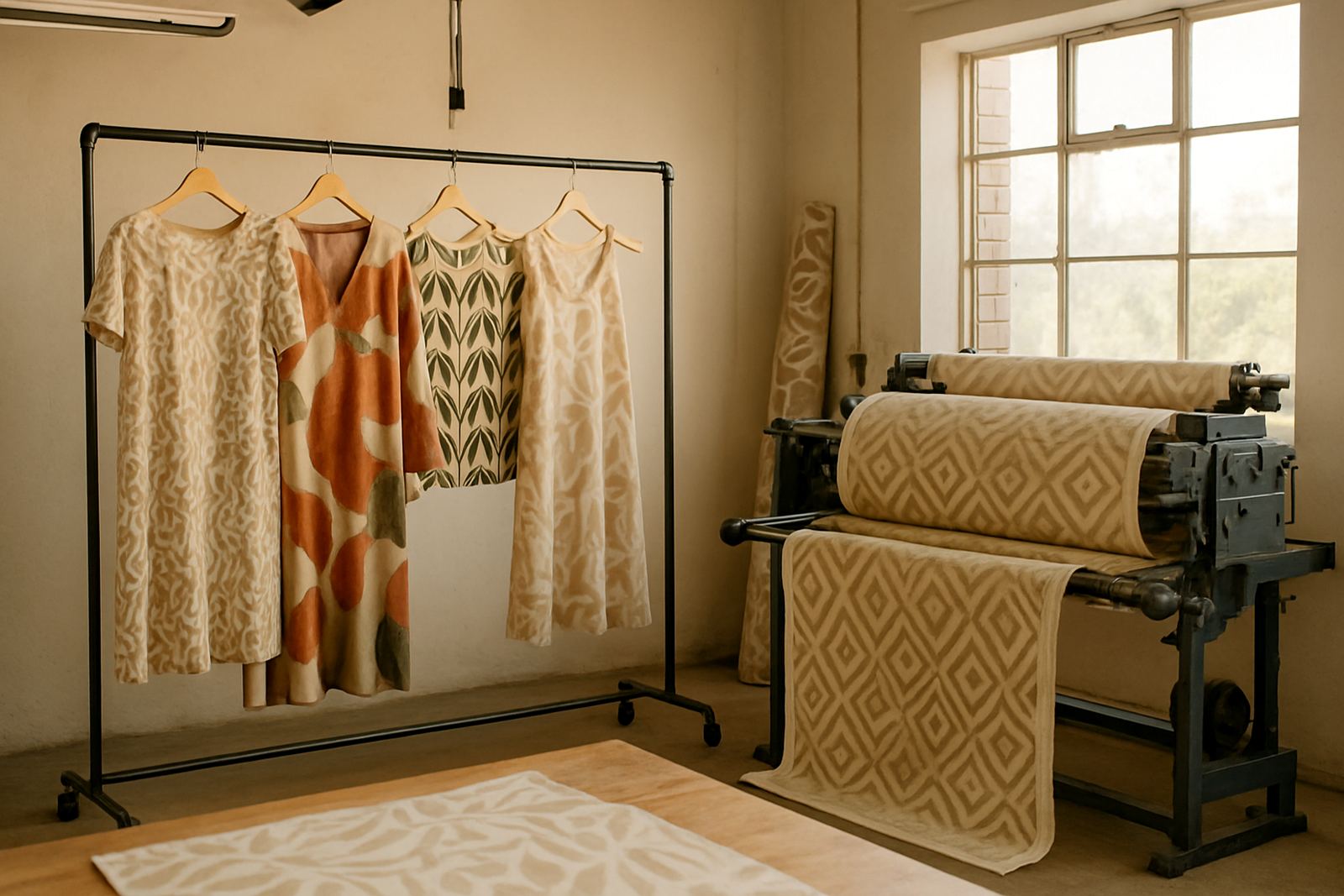
For fashion work, the first step is usually the file and the cloth. The label supplied artwork that needed careful repeat checking, because even a small shift can show up on a garment seam. We checked the design file, repeated the pattern to suit dress cutting, and confirmed colour placement so key parts of the print would land in the right places on pattern pieces. That file checking stage saves a lot of trouble later, especially where panels and facings are involved.
We then matched the print to a dress fabric that would suit the intended finish. The client wanted something with a clean print surface and a comfortable handle, not too stiff. After testing, we moved ahead with a fabric suitable for fashion use, then produced a strike-off so the label could confirm colour before the main run. The sample also helped us adjust saturation slightly, which kept the print looking balanced under shop lighting and natural daylight. Cape Town’s coastal humidity can affect handling and packing, so we kept the material protected during turnaround.
- Repeat pattern setup for dress cutting
- File checking before production
- Strike-off sampling for colour approval
- Fabric selected for drape and print clarity
Short-run production for a launch deadline
The order was completed over three weeks, which gave enough time for setup, approval and finishing without delaying the launch. Week one covered artwork checks, repeat preparation and the strike-off. In week two we moved into the main print run, keeping close watch on colour stability and print registration. Week three was used for finishing, packing and dispatch. That timeline worked well because the label was still finalising garment samples while we were printing, so we could keep communication open and make one small adjustment before the final batch.
Short-run work needs steady coordination. If a design is approved late or a finish is not right, you can lose days. We kept the process moving by confirming quantities early and aligning the fabric width with the intended garment sizes. The run was not oversized, and that helped reduce dead stock. It also suited a boutique label that wanted a tighter hold on cash flow, instead of tying money up in excess metreage. There was one minor delay when the client changed the placement of a motif, but it was handled before the main print and did not affect delivery.
- Timeline: 3 weeks from setup to dispatch
- Production style: short-run, controlled quantities
- Adjustment handled before main printing
- Focus: reduce waste and dead stock
Hemming, packing and courier dispatch nationwide
Once printing was complete, we handled finishing and packing so the fabric arrived in good condition and ready for cutting. For fashion labels, that part matters just as much as the print itself because curled edges, damp packing or poor folding can create avoidable problems on the cutting table. We checked the output, completed the required finishing, then packed the rolls securely for courier collection from our Ndabeni studio in Cape Town.
The client needed the fabric delivered fast enough to keep sampling on track, but also neatly enough for easy intake at their studio. We coordinated the courier process and sent the order out with clear handling details. This is especially useful for labels working between the Cape Town city bowl, the southern suburbs and further afield, because their production may be split between makers, cutters and sample machinists. Our packing and courier process is set up to keep printed fabric in a clean condition through transit, even in busy delivery periods. It saves time on arrival and there is less rework needed when the roll is opened.
- Hemming and finishing completed before dispatch
- Packed for secure courier transport
- Courier delivery arranged nationwide
- Suitable for sample rooms and small production teams
Results for the Claremont collection
The finished fabric gave the label a print that looked consistent across the short run and held up well through garment making. The colour read clearly on the dress shapes, and the repeat placed neatly on the finished sample pieces. That helped the team present a coherent collection to buyers without having to explain variations from one garment to the next. The outcome was practical, not flashy, which is what most small fashion houses actually need when they are trying to get a range into market on time.
The client also gained better control over their buying. Because the run was short, they could test the design with stockists before committing to a bigger order. That matters in fashion, where demand can shift quickly. The label was happy to keep the print as a core seasonal option, and they were able to reuse the same artwork for future colourways. For us, the project showed again that a careful setup and proper sampling can make a modest order look much more expensive than it is. Sometimes the details are what make the difference, and this was one of those jobs.
- Consistent colour across the batch
- Good repeat placement on garment pieces
- Useful for buyer samples and launch stock
- Artwork suitable for future colourways
What we would repeat on the next fashion run
If we were doing this project again, we would keep the same structure. Start with file checking, confirm the repeat size against the pattern pieces, approve a strike-off, then move into production and finishing with no shortcuts. For small fashion labels, that sequence keeps the work tidy and avoids last-minute surprises. We would also keep the communication tight while the garments are being cut, because a slight change in dress length or panel size can affect where the motif lands.
This project suited our way of working well: practical advice, proper sampling and a printed fabric result that can go straight into a local collection. Fabric printing for fashion is not only about making the cloth look good on the roll. It has to behave in the sewing room, on the body and on the retail rail. That is why we stay focused on the details that matter to makers in Cape Town and beyond.
- Repeat the same approval flow for accuracy
- Keep motif placement aligned to garment pieces
- Use the same finishing standard for packing
- Allow time for one sample check before the main run
Key facts
| Project | Short-run printed dress fabric for a Claremont fashion label |
|---|---|
| Location | Ndabeni, Cape Town with courier delivery nationwide |
| Timeline | 3 weeks from artwork check to dispatch |
| Services used | Custom Fabric Printing, Repeat Pattern Setup, Colour Matching, Strike-Off Sampling, File Checking, Hemming and Finishing, Packing and Courier |
| Order type | Small batch fashion production |
| Use case | Seasonal boutique dress collection and sample garments |