A café refresh with clear local requirements
The client was a hospitality business in Somerset West planning a lighter, more welcoming interior for a busy daytime café. They wanted printed fabric details that would sit comfortably beside timber, painted walls and existing furniture, without making the room feel overdone.
The brief was straightforward on paper but very specific in practice. The fabrics needed to work for upholstered seat pads and small table accents, stay presentable under daily cleaning, and keep their colour in a room that gets strong natural light for most of the day. Because the café serves constant foot traffic, we also had to think about durability, spill resistance in the finish and how the fabric would wear on high contact areas.
Somerset West brings its own conditions too. Coastal humidity can affect storage and handling, and with load-shedding still part of business life, the client needed a supplier who could plan printing, finishing and dispatch without unnecessary delay. We set the project up to move in clear stages so there was no confusion once the order was approved.
Print planning, repeat setup and colour matching
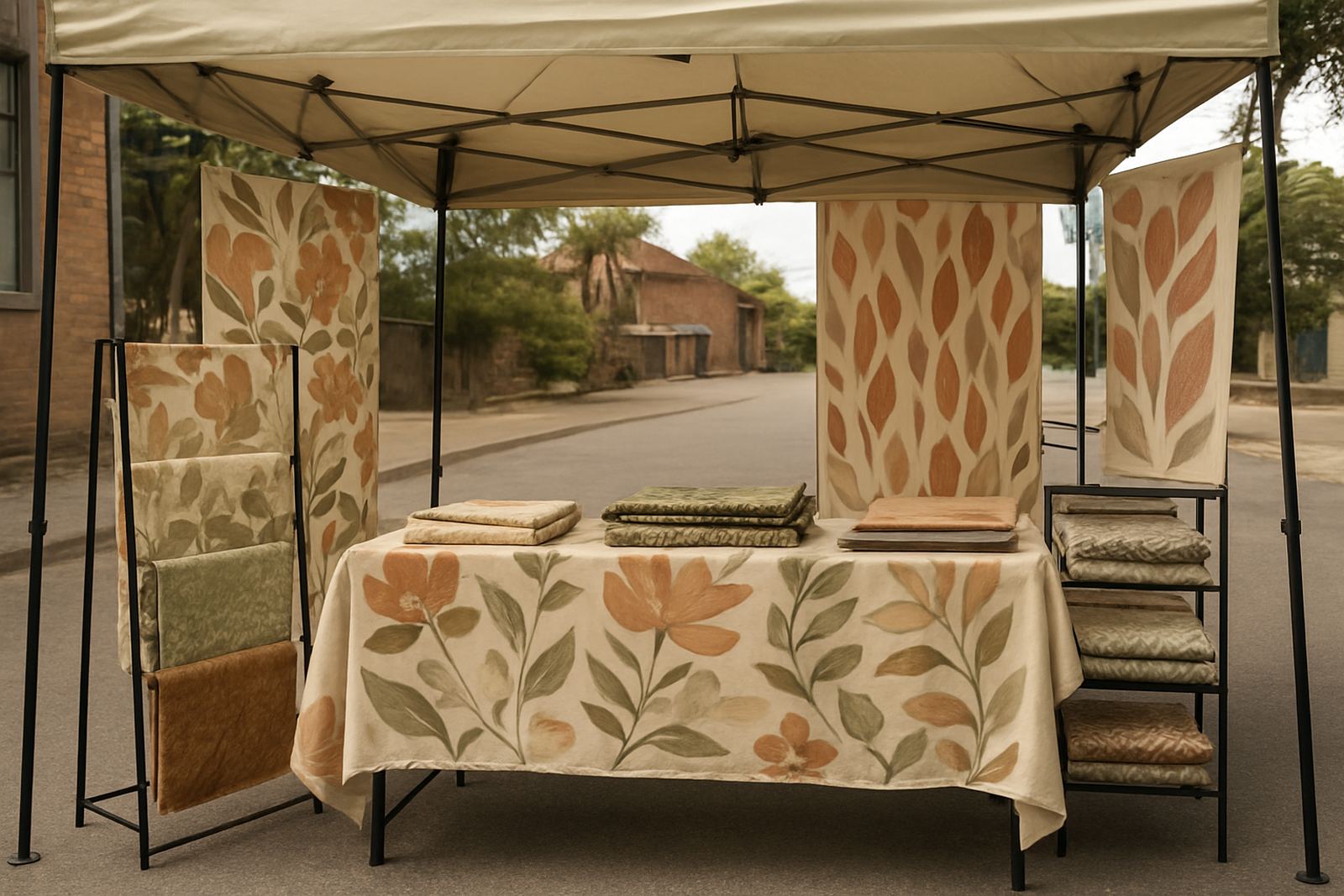
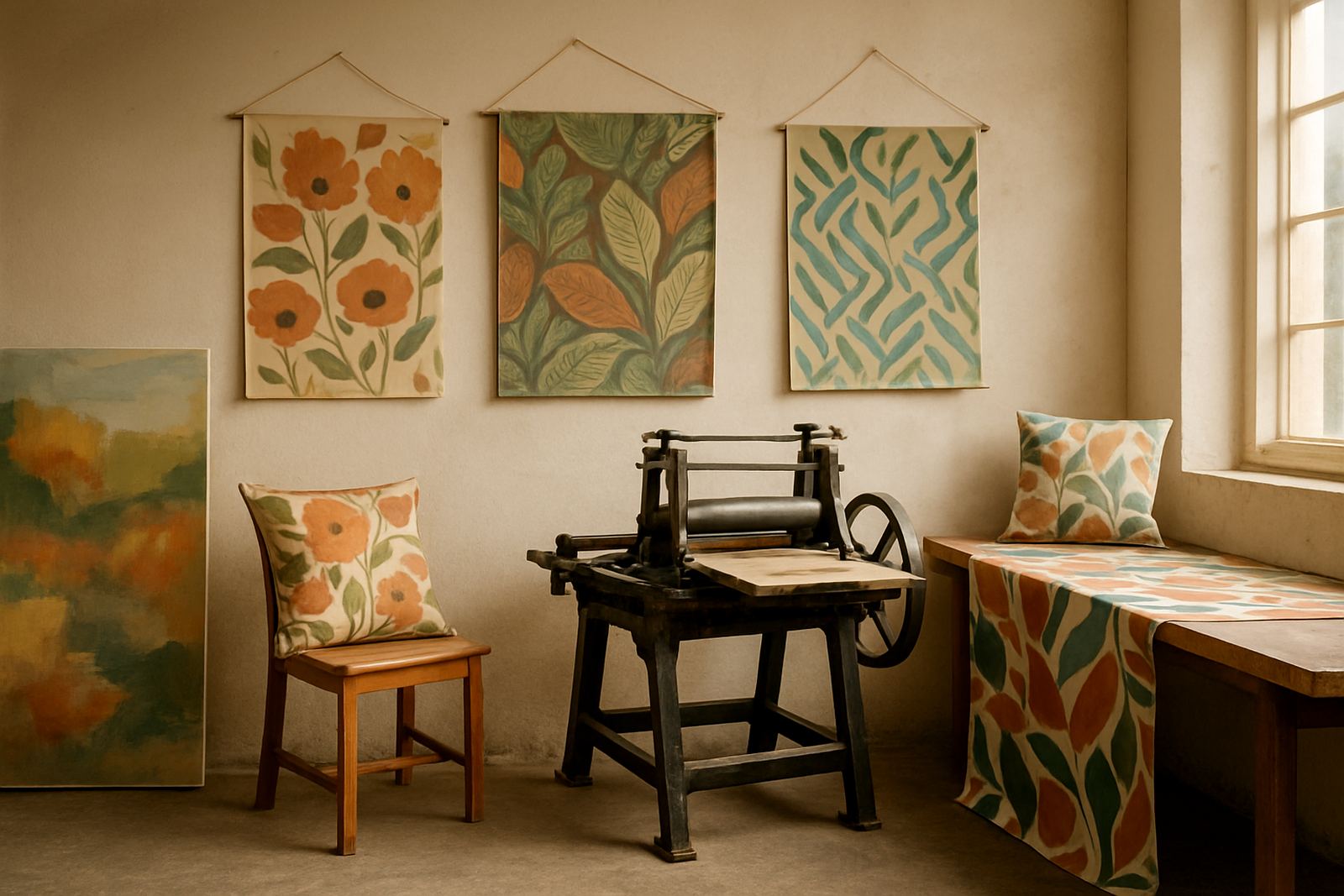
The design work focused on a subtle repeat that could be used across multiple fabric applications without looking busy. The café wanted something distinctive but calm, so we worked with a restrained palette and checked how the artwork would sit on both larger upholstered panels and smaller folded accents.
Before going into production we carried out file checking, repeat pattern setup and strike-off sampling. That let us confirm the placement of the motif, check edge alignment, and make sure the colours held together under café lighting. Matching was important because the client wanted the fabric to sit close to the tones used in the rest of the interior.
- Repeat pattern setup for a balanced, low-noise layout
- Strike-off sampling for colour approval before the main run
- File checking to catch scaling or edge issues early
- Colour matching against the interior palette and sample board
The approved sample gave the client confidence that the printed fabric would look the same across seat pieces, table accents and any future reorders. That consistency matters in hospitality, especially when the space may be updated in sections over time.
What we supplied for the fit-out
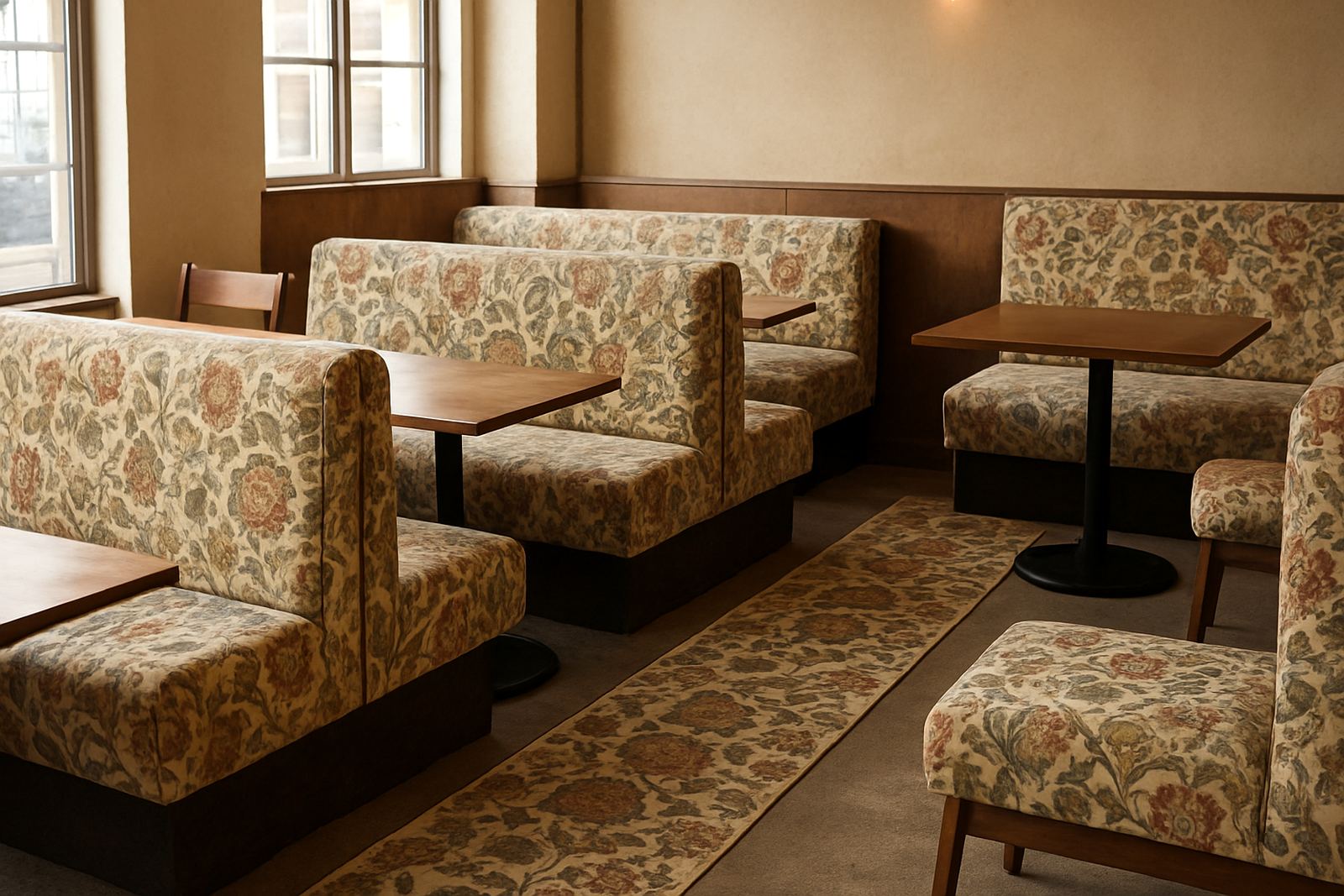
We supplied printed fabric by the metre for the seat covers and smaller feature pieces, then handled the finishing so the material could move straight into installation. The work included hemming where required and neat packing for the café's installer and furniture team.
For this project, the specifications were set around practical use rather than showpiece printing. The fabric had to handle frequent sitting, wiping down after spills, and exposure to sunlight near the front windows. We printed the cloth in a format suited to local upholstery work, so the upholsterer did not need to waste time reworking awkward sizes.
- Custom printed fabric by the metre
- Seat fabric for upholstered café chairs and benches
- Table accent fabric for smaller soft furnishings
- Hemming and finishing for cleaner installation
- Packed for courier delivery to Somerset West
The result was a set of materials that looked deliberate in the room, not like an afterthought. Because the printing was done to the actual application sizes, the installer could work faster and keep the placement neat across the seating run.
Three week production plan from sample to dispatch
The project was completed over three weeks. Week one covered artwork review, file checking and the first strike-off. Week two was used for approval, colour adjustments and the main print run. Week three covered finishing, packing and courier dispatch.
That timeline suited the café's fit-out sequence and gave everyone enough room to sign off the sample before production moved ahead. It also allowed us to manage the job around other print runs without rushing the final finish, which is important when a hospitality client needs fabric that must look tidy on day one.
We kept the client updated as each stage moved forward. For a job like this, clear communication matters as much as the printing itself. If an installer is waiting on fabric to finish a seat, one missed update can hold up the whole opening plan.
Results in the room after installation
Once installed, the printed fabrics gave the café a cleaner and more settled look. The seat pieces carried the design without overpowering the room, while the table accents tied the scheme together and made the interior feel intentional from table to table.
The client reported that the new materials held their colour well in daylight and cleaned up easily after normal daily use. In a hospitality setting that is a practical win, because staff need furnishings that can handle coffee spills, regular wiping and constant turnover without looking tired too quickly.
From our side, the project worked because the print choice was scaled properly for the room. The pattern had enough movement to be noticeable, but not so much that it fought with the furniture or menu displays. That balance is often what makes a café interior work day after day.
What we would repeat on the next café order
If we were repeating this type of job for another Somerset West or Cape Town café, we would keep the same process: sample first, approve the repeat, then print the main run once the layout is confirmed. It saves time and keeps the colour consistent across every metre.
For hospitality clients, we also recommend planning a small extra allowance for repairs or future additions. Even a well-managed café can need another chair panel or a replacement table accent later on, and having the same print batch makes that much easier.
- Keep the first sample small and close to final use
- Allow a little extra metreage for future repairs
- Choose a finish that suits wiping and daily handling
- Match the fabric to the room light, not just a colour swatch
For this project, the final outcome was practical, neat and easy for the client to live with. That is usually the right test for café fabric: it should look good at opening, then still look acceptable after the first busy month.
Key facts
| Project | Somerset West Café |
|---|---|
| Location | Somerset West, Western Cape |
| Service | Custom fabric printing for café interiors |
| Items supplied | Printed seat fabrics and table accents |
| Production time | 3 weeks |
| Finish | Hemming, packing and courier dispatch |
| Base | Ndabeni, Cape Town |
| Delivery | Courier fabric nationwide |