Start with the viewing distance, not the artwork
The first mistake many clients make is designing for a screen instead of a room. A backdrop at a wedding, product launch or trade event in Cape Town is usually seen from 2 to 8 metres away, so the main message needs to stay simple. One logo, one line of text and a clear visual usually works better than a crowded layout.
If the backdrop is for photos, think about where people will stand. A step and repeat wall for media shots needs repeated branding with enough space between marks so faces are not lost in the print. For a stage drop behind a speaker, the logo can sit higher and larger because the audience will see it over heads and chairs.
In Ndabeni and the surrounding industrial areas, many clients collect or courier backdrops for conference halls, activation stands and community events. Measure the site properly and check the clear width, not just the wall size. Leave room for stands, pipe frames, curtain tracks or tension systems and do not forget low ceilings, fire exits and speaker positions.
- Measure the visible opening in metres, not the full wall.
- Allow space for stands, clamps or hems at the edges.
- Keep key wording above seated head height.
- Use bold type that still reads at a distance.
Choose the finish for the venue, lighting and weather
The fabric finish changes how the backdrop behaves on the day. A matt print reduces glare from stage lighting, camera flashes and bright daylight. That is often the safest choice for conferences, indoor launches and media walls. A softer woven finish can also help with photography because it cuts down on reflections.
For outdoor activations, you need to think about wind, moisture and transport. Cape Town weather can shift quickly, and if the event is near the coast the air carries more humidity. That means the print should be packed properly, kept dry and fitted to a frame that can handle movement without looking baggy.
Heavy fabrics usually hang better and crease less, while lighter fabrics are easier to courier across South Africa. If the backdrop will be reused many times, ask for finishing that suits repeated installation. A neat hem, reinforced edge or pole pocket can save time on site and reduce damage during setup.
- Matt finishes work well under strong lights and cameras.
- Heavier cloth hangs straighter for indoor stages.
- Reinforced edges help with repeated use.
- Outdoor setups need extra attention to wind and moisture.
Plan the fixing method before the print run starts
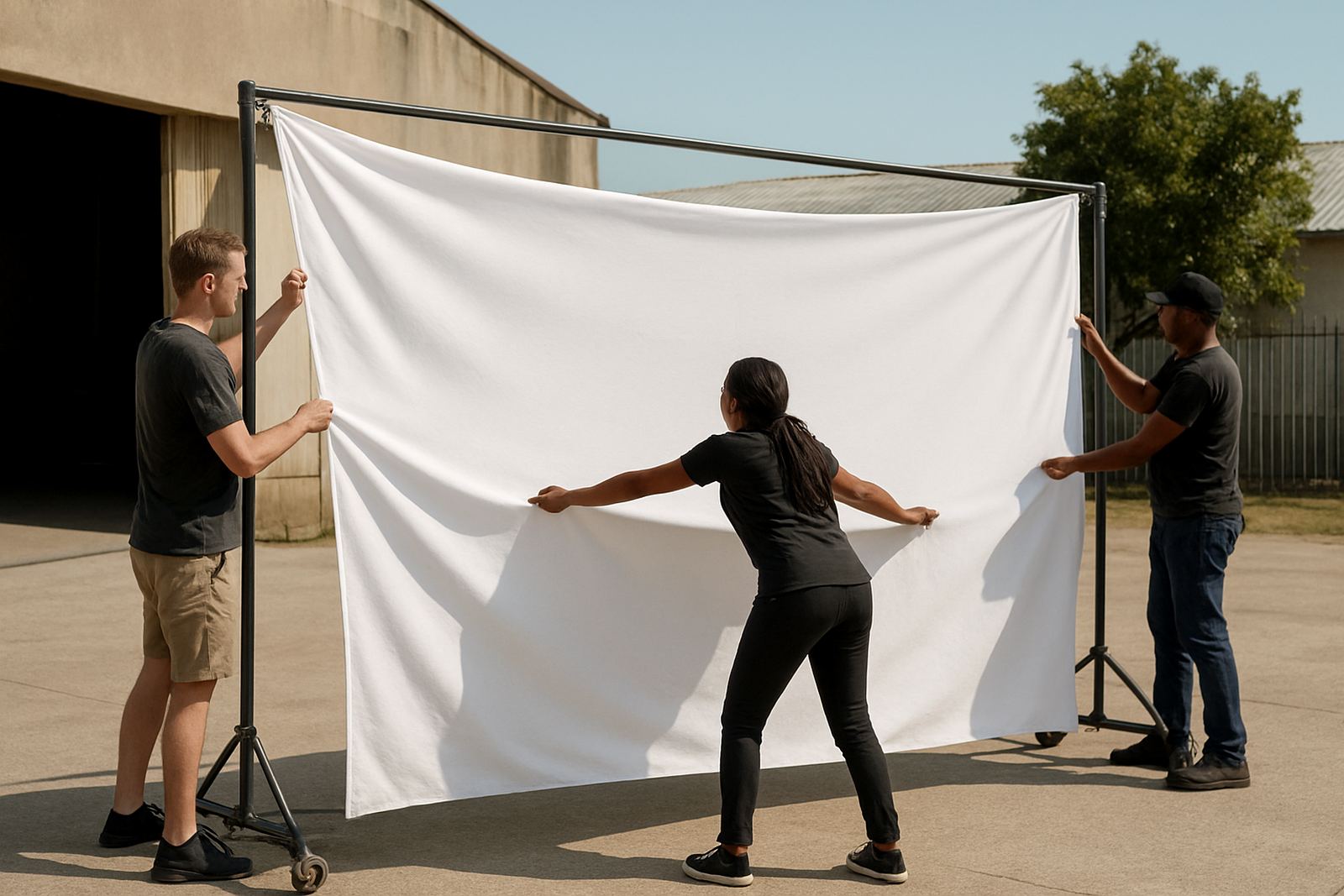
The way a backdrop is installed should be decided at the quoting stage, not after printing. There is a big difference between a fabric drop that hangs from a rail, a stretch wall pulled over a frame and a curtain style panel that needs ties or hooks. Each one changes the artwork size, hems and finishing allowance.
For venues with strict rules, especially hotels, conference centres and municipal halls, check whether drill holes are allowed. Some spaces only permit temporary stands or existing rails. If you are using a fabric backdrop for a one day activation in Woodstock or Century City, a freestanding frame is often quicker and cleaner than trying to fit to a wall.
Where transport is tight, folding size matters too. A folded fabric panel is easier to courier than a rigid board, and it is less likely to be damaged in a lift or doorway. That matters for clients sending kit to Durban, Gqeberha or Johannesburg with a deadline the next morning.
- Decide early if the backdrop will hang, stretch or clip on.
- Check venue rules on drilling, tape and wall fixing.
- Ask for pocket, hem or reinforced edge details upfront.
- Consider fold size if the backdrop must be couriered nationwide.
Use colour carefully so the brand stays readable
Printed backdrops often carry bright brand colours, but what looks good on a laptop can print darker or flatter on fabric. Strong colour matching is worth doing if the backdrop is part of a brand launch or recurring event series. It helps keep the same red, blue or green across banners, garments and stage drops.
Bold colour blocks can work well, but they need breathing space. Dark text on a dark background disappears under poor lighting and pale colours can wash out near windows or open doors. If the event runs in the late afternoon, ask how the print will hold under mixed light, because daylight and stage spots do not treat fabric the same way.
At Fabric Printers Studio in Ndabeni, colour checks and strike-off sampling are useful before a bulk run. That is especially practical when a client needs the same backdrop in different sizes for branches, roadshows or year-end functions. It is easier to correct a tone on a sample than after twenty panels have been cut.
- Match event colours to existing brand material where possible.
- Keep contrast high for text and logos.
- Test the print under indoor and daylight conditions.
- Use a sample if the backdrop is for a repeated campaign.
Think through photography, not only foot traffic
Many event backdrops are really photo backdrops. That means the surface needs to look clean on camera from a few angles, not just from the aisle. Fine patterns can moiré on certain lenses, while overly busy artwork can compete with people in the frame. If attendees will take selfies or group shots, simpler often looks better.
A local example: a Cape Town launch in Salt River with a media wall near a window can have harsh side light by mid afternoon. In that case, a matt fabric with strong logo spacing and a plain background usually photographs better than a glossy surface or a dense all-over pattern. If the event carries on into load shedding hours, portable lighting can also change the way colours read so plan for that too.
When you are printing for both social media and live use, build the design around the camera, not only the stage. Leave clean edges, avoid tiny sponsor names and make sure the most important marks sit at eye level for standing guests.
- Keep patterns simple if people will be photographed close-up.
- Avoid too many small sponsor logos.
- Check how the backdrop looks beside windows and lights.
- Plan for low-light conditions if the event runs into evening.
Order timing, quantities and spare panels with the event calendar in mind
Event work has a habit of landing all at once. End of year functions, expo season and product launches can all run together, so lead times matter. Small batch printing is useful when the design is still being approved, while bulk print runs suit a full tour or franchise rollout. If the backdrop is needed in different towns, packing and courier need to be part of the plan from the start.
Try to allow time for file checking, sampling and finishing. A rushed backdrop can still print well, but it is harder to fix measurements, spelling or crop issues once the event date is close. If the panel is going to be reused, keep one spare or a second copy for long campaigns. It saves stress when a panel gets marked during setup or a courier delay happens.
For businesses in Montague Gardens, Observatory and the Cape Town CBD, a local production base in Ndabeni helps when the turnaround is tight. But even then, clear artwork and final sizes should be approved early so production can move straight into print, hemming and dispatch without rework.
- Build in time for checking artwork and layout.
- Allow for finishing, packing and courier transit.
- Order a spare if the backdrop will be reused often.
- Confirm the final size before the fabric goes to print.