Why fashion designers come to us for fabric printing
Designers usually come to us when off-the-shelf cloth will not carry the look they want. It might be a capsule range for a pop-up, a resort collection for coastal retail, or a small run of statement pieces for a photo shoot. We print to order, which helps when you need a specific print scale, a tighter colur match, or a fabric base that feels right on the body.
Our work suits independent labels, fashion houses, student collections and makers who need enough control to test an idea before placing a larger order. If you are based in Cape Town, the practical side matters too. Ndabeni, Woodstock, Salt River, Observatory and Montague Gardens clients often need quick turnarounds, while clients elsewhere in South Africa rely on careful packing and courier. That is part of the service, not an add-on.
- Custom prints for dresses, shirts, linings, scarves and statement pieces
- Small batch sampling before you commit to production
- Repeat pattern setup for a cleaner finish across panels and seams
- Fabric by the metre for cut-and-sew work
Typical equipment set for a fashion project
A fashion print job needs more than a file and a machine. It starts with the artwork, then the print method, then the cloth choice, then the finishing. For designers, the base fabric is often as important as the artwork because drape, opacity and texture all affect the garment.
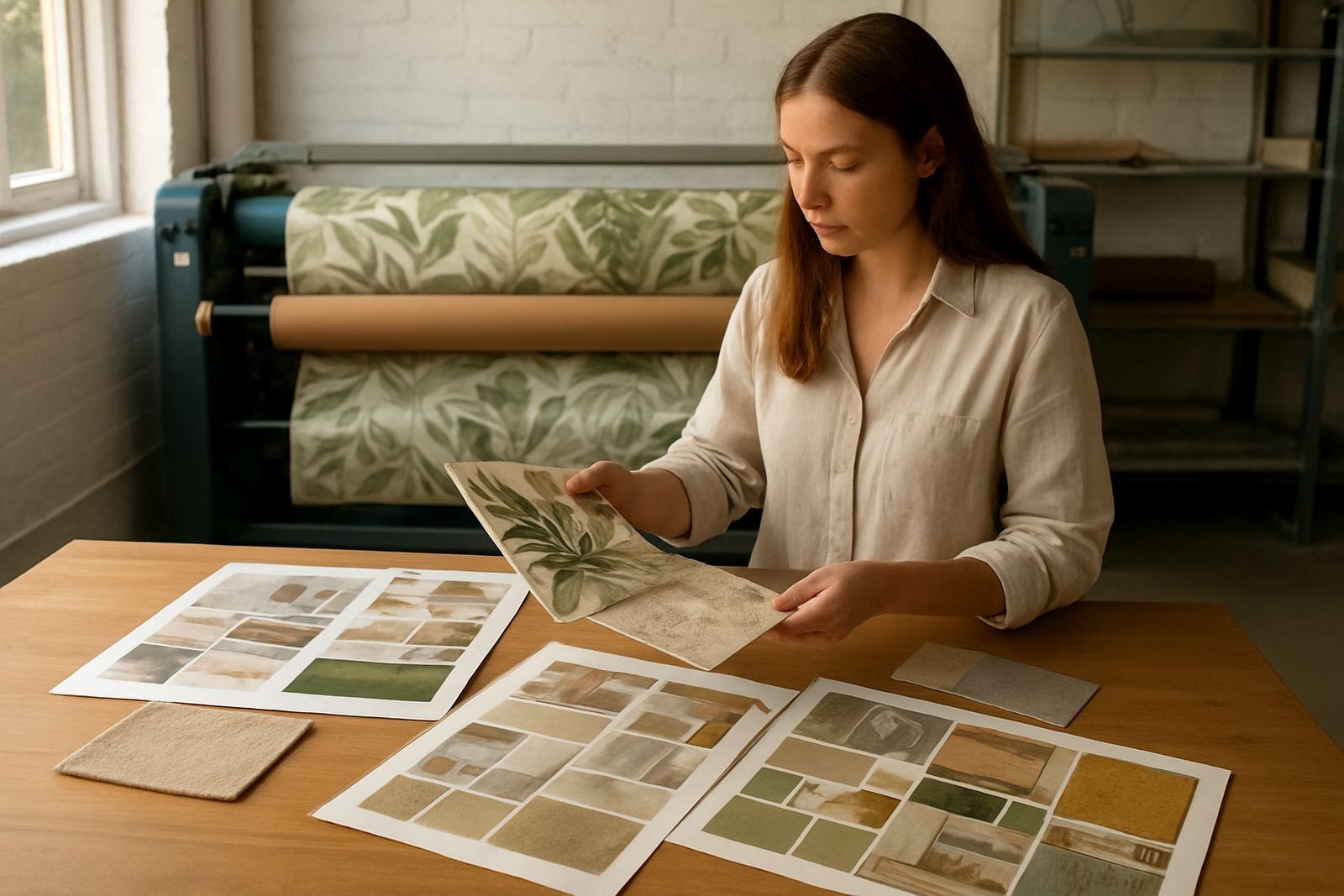
We can help with fabric sourcing and strike-off sampling before full production. That means you can check how the print sits on the cloth, how the colours dry down and whether the repeat works once the fabric is cut. For apparel, this step saves money later. It is a lot cheaper to fix a 5 metre sample than 200 metres of the wrong base.
- Artwork files with clean repeats and correct dimensions
- Printed strike-offs for colour and scale approval
- Woven or knitted base cloth selected for the garment type
- Hemming and finishing where the design needs ready-to-use fabric
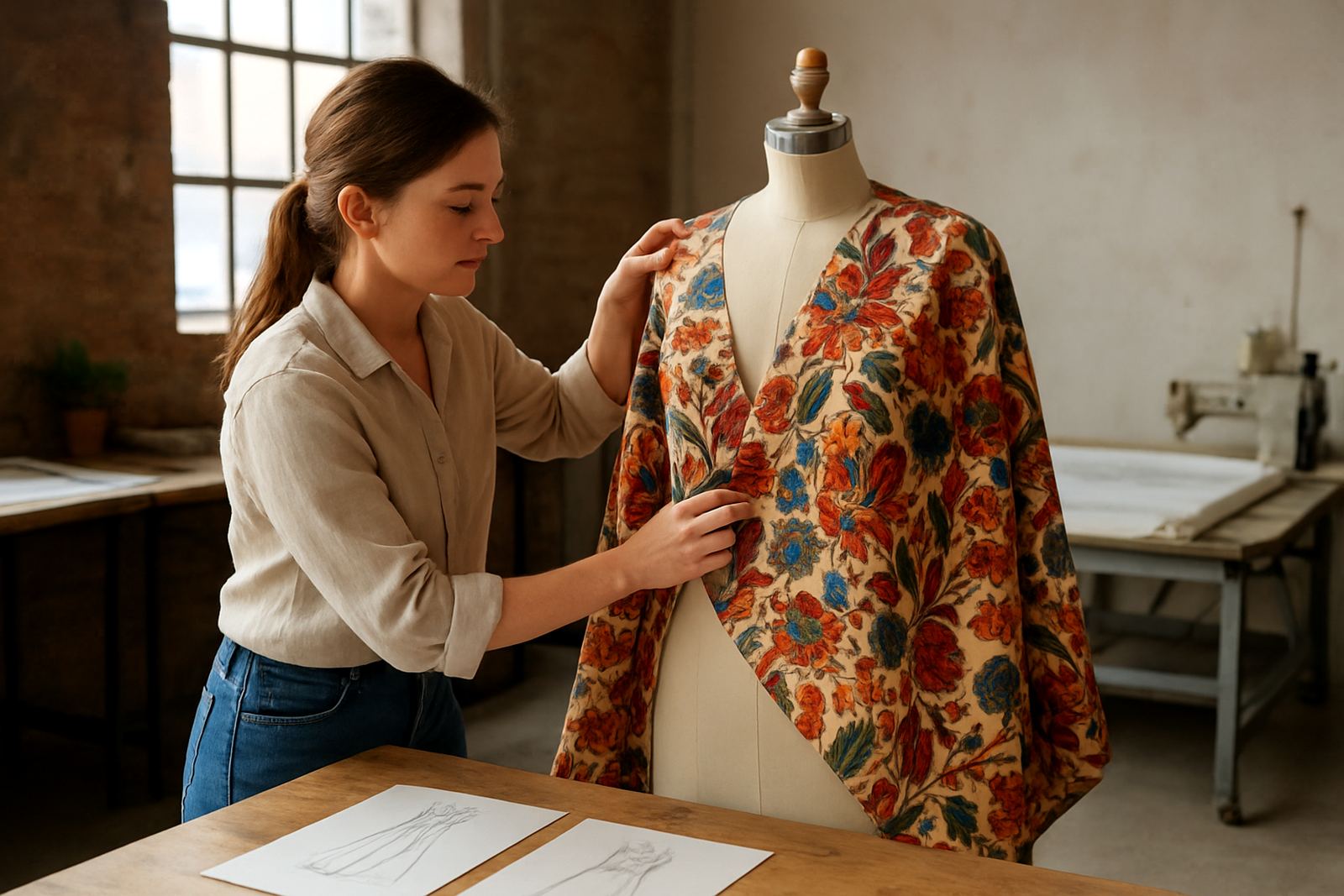
If your collection includes both structured and flowing pieces, you may need more than one fabric type. A shirt range and a soft dress range rarely behave the same, even when the print is identical. We usually advise designers to plan for that early instead of trying to force one cloth to suit every style.
Layout and planning advice before you send artwork
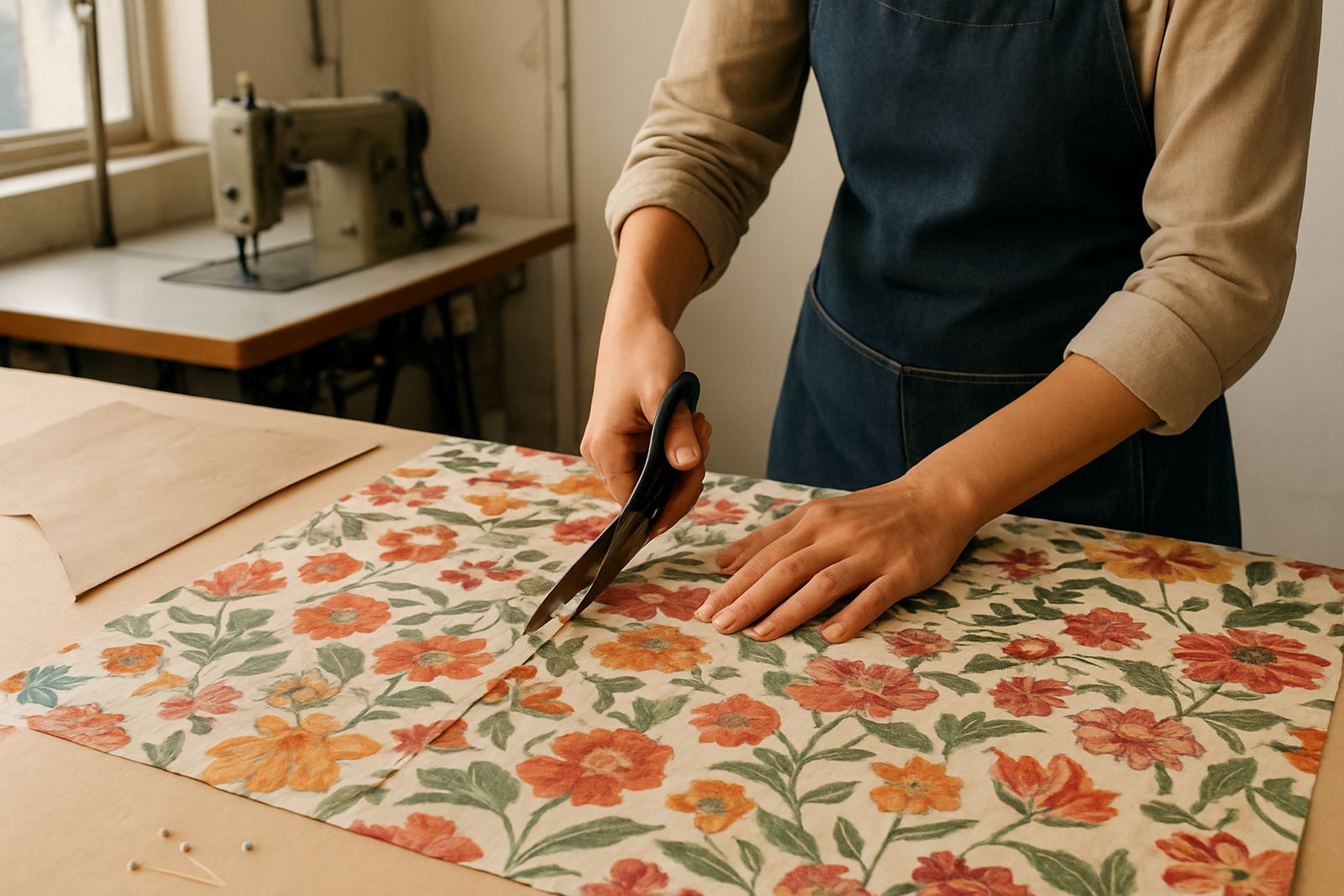
Good planning starts with garment construction. If the print must line up at centre front, across sleeves or over pockets, the repeat has to be set with those joins in mind. This is where many collections go wrong. The print looks fine on screen but lands badly once panels are cut.
For most fashion work, we suggest designers prepare a clear spec before production. That should include the print size, placement notes, final fabric width, and the number of metres needed per style. If you are making samples, say so. Sampling is handled differently from bulk print runs and often needs a slower approval process.
- Send vector or high-resolution artwork wherever possible
- Confirm the final cloth width before you finalise pattern pieces
- Allow extra metres for cutting, shrinkage and fault checks
- Keep seam placement and print placement aligned from the start
For Cape Town designers, timing can also be affected by load-shedding and end-of-month courier traffic. A sensible plan gives you a buffer of at least a few days before fittings, launch shoots or market deliveries. Rushing a run because the range is going live on Friday is when mistakes creep in.
Colour matching, sampling and strike-offs for range development
Colour in fashion is rarely just colour. It has to work under studio lighting, daylight, shop lighting and camera flash. A soft blush can look warm in one room and dusty in another. That is why colour matching and strike-off sampling matter so much for designers.
We can print small samples first, then adjust before the full run. This is especially useful for seasonal ranges, tonal prints and collections where the print needs to sit beside trims, thread or lining. It is also useful when you are working with clients in different towns and want the same shade to reproduce correctly each time.
- Sample one or two metres before committing to bulk metres
- Test your print on the actual fabric base, not only on screen
- Check colour under indoor light and natural light
- Keep a record of approved shades for future reorders
Some designers want a print that is bold at first glance but still wearable in store. Others want a quieter repeat that sits behind the cut of the garment. Either way, the sampling stage helps you avoid a whole batch that feels too loud, too flat or too busy. It is a small cost compared with redoing a collection later.
Common mistakes fashion designers make with printed fabric
We see the same problems again and again. The artwork is beautiful, but the fabric choice, scale or timing lets the job down. In many cases the mistake is not creative, it is practical. Designers under-budget for sampling, forget to allow for waste, or send files that need too much correction.
Another common issue is choosing a fabric that does not suit the end use. A print for a summer blouse will not behave like a print for a fitted jacket. You also need to think about finishing. If hems, edges or panels are not planned properly, the garment can look unfinished even when the print is spot on.
- Ordering bulk before approving a strike-off
- Using a fabric that is too stiff or too sheer for the design
- Ignoring repeat size, which makes the print look off on body
- Forgetting to factor in waste, offcuts and pattern matching
We also advise designers not to cut their budgets too tightly. A collection can be ruined by saving a few Rand on the wrong base cloth. For small ranges, a realistic fabric-print budget may start around R1,500 to R4,000 for samples and test runs, then move up to R6,000 to R25,000 for a compact capsule. Larger production orders can go beyond R30,000 depending on fabric, metres and finishing.
Budget ranges and what affects the final price
Pricing depends on fabric type, print size, metres required, number of colour changes and whether you need sampling first. A simple one-colour repeat on a basic cloth is not the same as a detailed multi-tone pattern on a speciality base. Finishing and packing also add to the total.
As a rough guide, many designers work in three budget bands. Entry-level sample work might sit between R1,500 and R5,000. Small production runs for local sales or fittings may fall between R5,000 and R15,000. Larger seasonal runs for boutiques, online stores or wholesale can range from R15,000 to R60,000 or more, depending on metreage and fabric choice.
- Small batch printing for launch pieces and tests
- Bulk print runs for repeat bestsellers
- Fabric sourcing when you need a better base cloth
- Packing and courier for Cape Town and nationwide delivery
If you are working from Ndabeni, Woodstock or Salt River, collection can often be arranged around production timing. For clients further afield, courier fabric nationwide after final approval and packing. That helps keep the schedule moving even when your studio is in Joburg, Durban or a smaller town with fewer sourcing options.
How to brief your print partner for a clean result
The best jobs start with a proper brief. Tell us what the garment is, who will wear it, how many metres you need, and what the print must do on the body. If you are making a capsule range, include your target launch date and whether the fabric must be cut-ready or only supplied by the metre.
When the brief is complete, we can advise on print scale, repeat setup, colour matching and finishing. That makes production simpler and reduces back-and-forth. It also helps our team coordinate checking, printing, finishing and dispatch without holding up your range.
Fashion work moves quickly, but good cloth still needs care. A neat brief, clear approval process and realistic budget will save you time, money and frustration. That is the difference between a collection that almost works and one that is ready to sell.