Start with the furniture, not the pattern
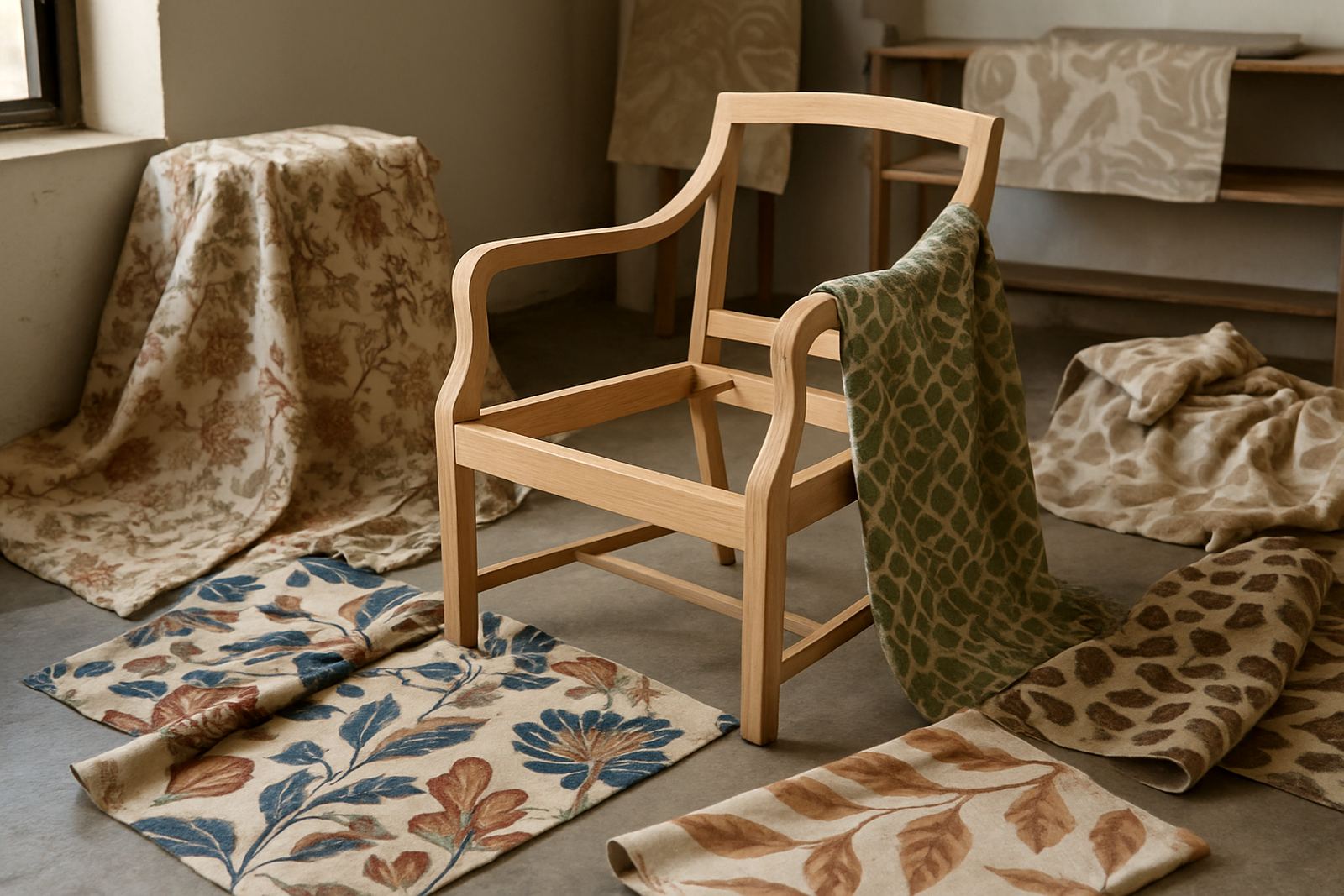
When clients in Cape Town ask for upholstery prints, the first question should be about the furniture itself. A print that looks lively on a scatter cushion can feel overpowering on a large couch, while a bold design that works on an armchair may get lost on a dining bench. The shape, depth and use of the piece all matter.
For a compact apartment in Woodstock or a sectional in Century City, the same pattern can behave very differently. Wide cushions and long backrests need enough pattern repeat to read clearly across the surface. Smaller chairs and ottomans can carry tighter repeats and busier motifs better because the eye sees the whole piece at once.
It also helps to think about where the furniture sits in the room. In strong natural light, colours can appear brighter and high contrast prints become more noticeable. In shaded rooms or spaces with darker paint colours, a print may need stronger definition so it does not look flat.
Pattern scale changes the whole result
Pattern scale is one of the biggest reasons upholstery projects succeed or miss the mark. A large floral, geometric or leaf design can look elegant on a lounge suite if the repeat is balanced and the artwork is planned for the full width of the fabric. But if the scale is too large for the furniture, the pattern may cut awkwardly at seams or lose key parts of the design.
Smaller repeats are usually easier to work with on seat pads, dining chairs and headboards. They also allow more flexibility when matching across multiple pieces. That said, a very small print can read as a texture from a distance, which is useful if you want movement without too much visual noise.
As a rule, ask how the print will sit across these areas:
- front-facing cushions and seat bases
- arms, corners and curved edges
- joins between panels and piping lines
- the back of the furniture if it is visible in the room
A good print plan takes those details into account before fabric is cut. That saves time and waste, especially on custom work where every metre counts.
Durability is just as important as the design
Upholstery fabric is not the same as curtain fabric or a fashion cloth. It needs body, wear resistance and a finish that can cope with regular sitting, friction and cleaning. In a family lounge, a guesthouse or a reception area, the fabric must hold up under pressure without rubbing thin too quickly.
For busy spaces, look for fabrics that are suitable for upholstery weight and that can take a firm hand during making up. Heavier bases are often better for structured furniture because they hold seams well and do not shift as much during use. If the piece will be used daily, a soft drape on its own is usually not enough.
In coastal areas like Cape Town, humidity can also affect how textiles behave over time. Fabrics need to be chosen with care so they do not sag, mark easily or lose their shape after cleaning. If the room gets strong afternoon sun, colour fastness becomes important too, because direct light can fade prints faster than many clients expect.
- choose a weight that suits the furniture type
- allow for regular cleaning and everyday friction
- check whether the print will stay sharp after handling
- consider sun exposure near windows and sliders
Match the print to the way the room is used
A good upholstery print should suit the life of the room, not only the look of the room. A formal sitting room can carry a more detailed design because the furniture may be used less often. A family room, school waiting area or café seat in Salt River needs something tougher and easier to live with.
Busy homes often do better with mid-scale prints that hide small marks and everyday wear. Very pale backgrounds can be elegant, but they show dirt sooner, especially on armrests and seat fronts. If a client loves a light design, it may be smarter to use it on higher-backed pieces or areas that are touched less often.
For hospitality and office use, the best results usually come from prints that stay clear at a distance and do not rely on tiny detail alone. Strong lines, even repeats and controlled colour palettes tend to age better. That is why file checking and strike-off sampling matter before bulk print runs are approved.
Use sampling before you commit to metres
Sampling is worth the extra step. A strike-off lets you see how the colour lands on the chosen fabric, how the repeat sits and whether the artwork feels too busy or too plain once it is printed. What looks balanced on screen can shift once it is on cloth, especially on textured upholstery bases.
It is also the safest way to check against existing pieces in the room. A print might look right on its own but clash with a rug, wall colour or wooden finish. In practice, one small sample can prevent a costly remake later.
When preparing artwork for upholstery, keep these points in mind:
- leave enough repeat for large seat and back panels
- check for colour shifts between screens and printed fabric
- make sure lines and motifs do not sit too close to seams
- confirm how the design reads from 2 metres away, not only up close
At Fabric Printers Studio in Ndabeni, this part of the process is handled before packing and courier, which helps clients across South Africa order with more certainty.
A local example from Ndabeni to Newlands
Take a Cape Town family redoing two lounge chairs and a daybed for a home in Newlands. They liked a bold botanical print, but the first sample made the chairs feel too busy because the leaf repeat was too large for the scale of the furniture. After adjusting the repeat and softening one of the background tones, the same idea worked far better.
The chairs became a feature without fighting the rest of the room, and the daybed still had enough pattern movement to stand out. That kind of change is normal. Upholstery is unforgiving if the print scale is wrong, but very effective once it is matched properly to the furniture.
For clients in Woodstock, Montague Gardens, Observatory and the broader Cape Town area, the same practical thinking applies whether the job is one chair, ten cushions or a full commercial fit-out. Good upholstery printing is part design and part discipline.
What to send when you enquire
The clearer the brief, the better the result. If you want a fabric print for upholstery, send the furniture measurements, a photo of the item in the room, and the expected use. If you already have a colour reference or a layout idea, include that too. It helps with repeat pattern setup, colour matching and choosing the right base fabric.
For many projects, especially where bulk print runs or matching sets are involved, it is worth asking for advice on fabric sourcing and finishing before production starts. That way the print, the weight and the final use all work together instead of being sorted out at the end.
For custom upholstery printing and courier fabric nationwide, the practical rule is simple: choose the pattern scale for the furniture, then choose the fabric for the wear.