Why printed curtains are back in South African homes
Printed curtains are getting more attention because they solve more than one problem at once. They add colour, soften a room and hide the marks that show up quickly in busy homes, especially in coastal areas where salt air, damp mornings and open windows are part of daily life.
In Cape Town flats, family homes in Durbanville, and townhouses in Pretoria, people are asking for fabric that works hard and still looks considered. A printed curtain can carry the colour of a room without requiring painted walls or expensive accessories, which is useful when a landlord or body corporate limits what can be changed.
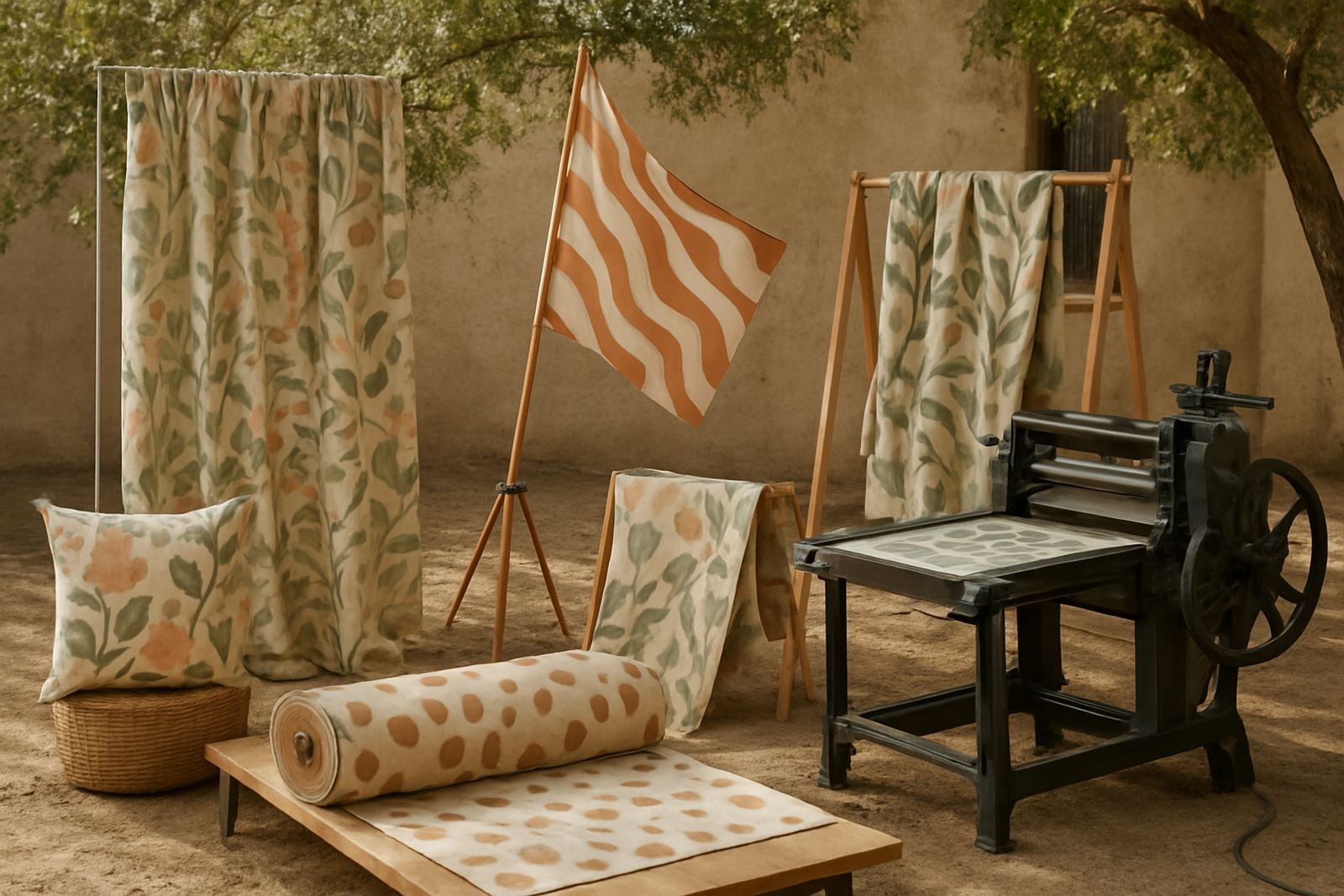
At Fabric Printers Studio in Ndabeni, curtain work often starts with the room itself. A north facing lounge needs different treatment to a bedroom that gets late afternoon sun. The best print trend right now is not about a loud picture, it is about choosing a design that sits well with the light, the furniture and the way the room is used.
- Light, airy prints suit small rooms and apartments.
- Darker prints help with glare and give more privacy.
- Repeated motifs work better than oversized scenes in most homes.
- Matte looking finishes usually feel more natural on curtains.
Pattern scale is doing the heavy lifting
The strongest curtain trend at the moment is scale. Large prints are still popular, but they are being used with more restraint. Instead of a full wall of busy pattern, many homeowners are choosing a repeat that reads as texture from a distance and detail up close.
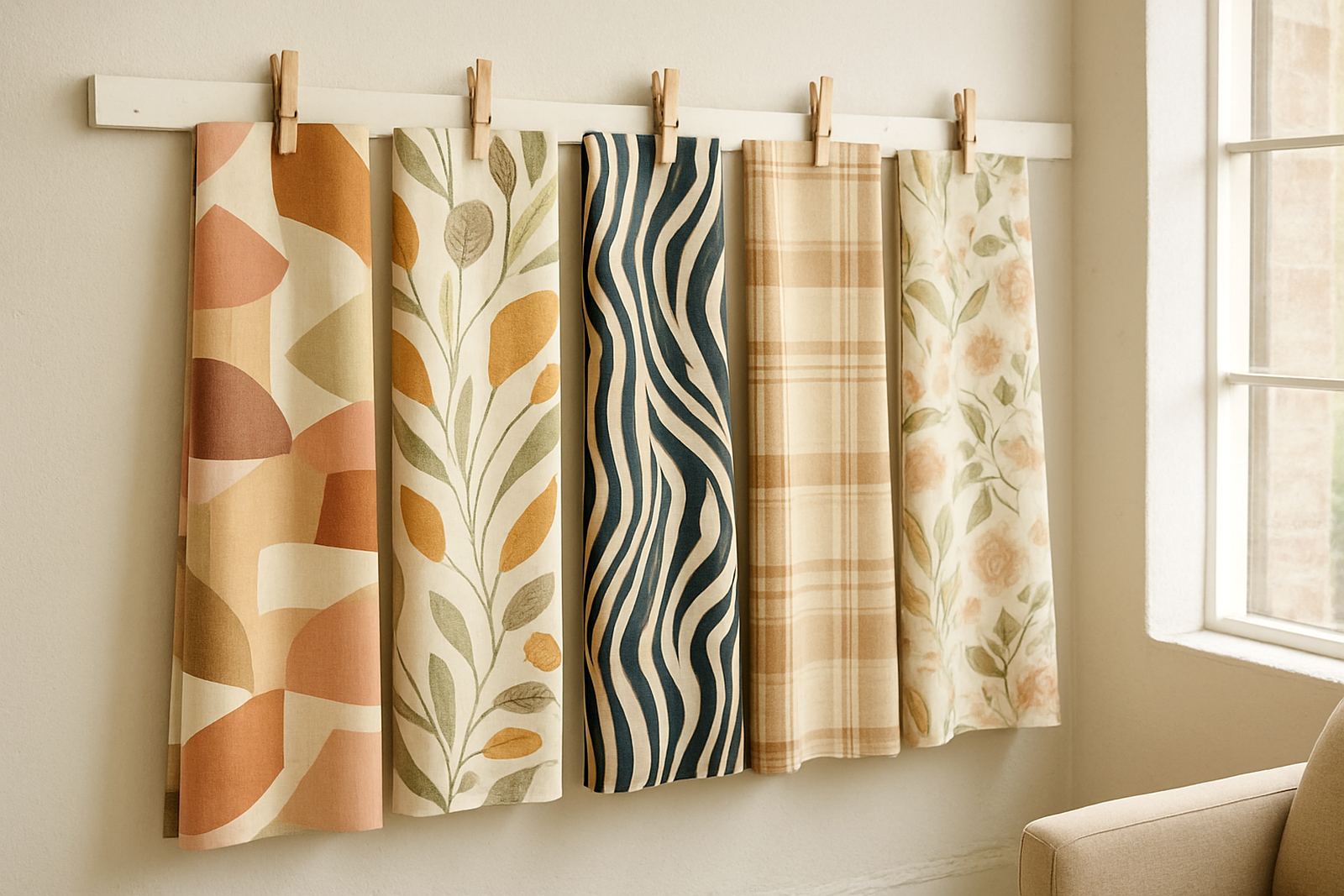
This works well in contemporary interiors where the sofa, rug and scatter cushions already carry enough visual weight. A mid scale leaf, line, stripe or abstract repeat can tie the room together without making it feel crowded. For open plan homes in Century City or Montague Gardens, that balance matters because the curtain often needs to work with both lounge and dining space at once.
If the room has patterned tiles or strong timber grain, keep the curtain print calmer. If the furniture is plain and the walls are pale, the curtain can carry more character. That is why repeat pattern setup is such an important part of custom curtain printing, it keeps the design readable across wider fabric drops and ensures the finished curtain hangs properly.
- Use larger repeats in rooms with plain walls and simple furniture.
- Use smaller repeats when the room already has several textures.
- Vertical stripes can help a room feel taller.
- Organic shapes soften hard lines in modern interiors.
Colour choices are leaning local and practical
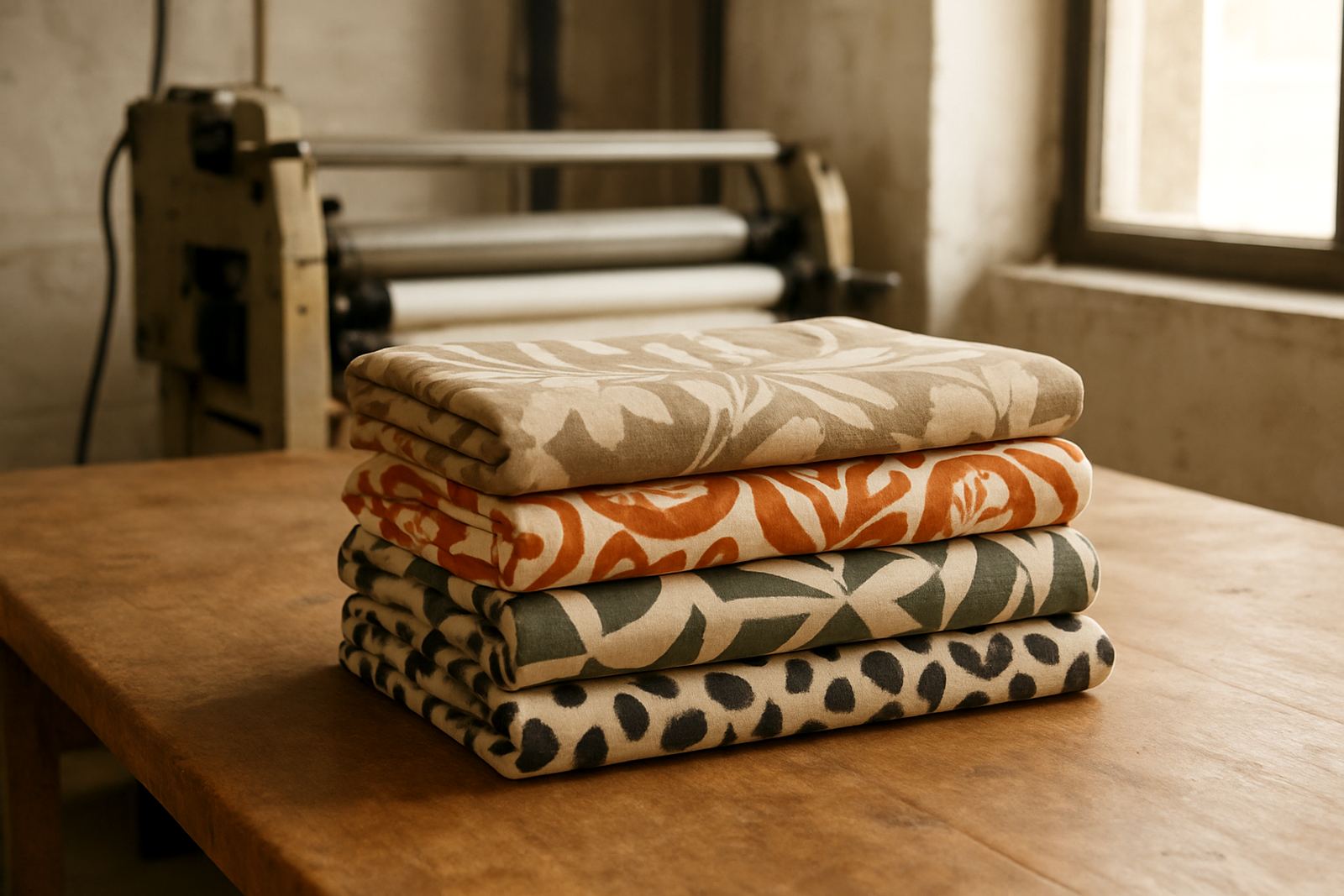
South African curtain trends are moving toward colours that feel calm but not bland. Sand, clay, olive, ocean blue and muted terracotta are common because they work with both warm and cool interiors. These shades also cope better with our strong light than very pale pastels, which can wash out by mid-morning.
In a Durbanville family room, a soft sage print can sit well with pine or oak furniture. In a Woodstock loft, a charcoal and off-white geometric can sharpen the space without making it feel cold. For homes close to the coast, slightly deeper shades are often a safer choice because they hide fading and daily wear better than light cream prints.
Colour matching is worth doing properly. Many customers bring in a cushion cover, a paint chip or even a photo of the room on a phone. That helps the print team check how the curtain will sit beside existing pieces before the fabric is run. It is a small step that saves a lot of regret later.
Fabric choice matters as much as the print
Current curtain trends are not just about what is printed, but what the print is printed onto. Homes with strong sun and frequent washing need fabric that keeps its shape and does not sag. Apartments with less space may need lighter cloth that folds neatly and does not feel bulky on the rail.
For full length curtains, the most practical choice is usually a fabric that takes print clearly and still hangs with some body. In coastal Cape Town, humidity can affect how fabric behaves, so finishing becomes important. Hemming, neat side seams and even top edge work all help the curtain hang well for longer.
Customers ordering by the metre for custom projects often use the same printed fabric for curtains, cushions and small upholstery pieces. That gives a room a linked look without overdoing the pattern. For anyone making curtains for a rental unit or guesthouse, this is a useful way to keep a consistent style across several rooms.
- Choose heavier cloth for better drape and privacy.
- Choose lighter cloth where you want filtered daylight.
- Ask for sample checks if the room is sensitive to colour shifts.
- Use proper hemming so the curtain sits evenly after washing.
Curtains for real homes need real-world finishes
Nice print alone is not enough. The rise in made-to-order curtain printing has also made finishing more important. Straight hems, correct drop length and accurate panel matching all affect how the final curtain looks once it is up. If the print repeat is off by even a little, the two sides of a window can look mismatched.
That is why small batch printing and file checking are so useful for curtain work. They let the design be reviewed before a full run starts. For homes with unusually shaped windows, sliding doors or wide openings, strike-off sampling can help confirm colour and scale before a larger order goes ahead.
For apartments in Observatory or older houses in Salt River, where window sizes can vary, custom finishing is often the difference between a curtain that looks fitted and one that looks rushed. It also makes installation easier for curtain installers and homeowners alike.
A Cape Town example: from strong sun to softer light
A practical local example is a lounge facing afternoon sun in Ndabeni. The owners wanted a printed curtain that would soften glare but still feel modern. A medium scale leaf repeat in muted blue-grey was chosen, then printed on fabric that could handle regular cleaning. The result was a room that felt cooler in tone and less harsh at day’s end.
That kind of job shows where current curtain trends are heading. People still want character, but they want it in a way that fits South African living. The best curtain print is the one that works through summer heat, load shedding evenings and open window weather without needing constant replacement.
For trade customers, guest houses and small retailers, bulk print runs make sense when several rooms need the same fabric family. For homeowners, a smaller run gives more freedom to test one room first. Either way, keeping the design practical is what gives printed curtains staying power.
- Think about sun direction before approving a colour.
- Use a sample in the actual room if possible.
- Match curtain weight to how often the room is used.
- Keep maintenance simple, especially for family homes.
What to ask before you order curtain print
Before placing a curtain order, it helps to be specific. Measure the drop, note the window width, check whether the curtain will be lined, and decide how much privacy you need. If you are unsure, a fabric team can help you compare options for print scale, finish and colour strength.
In practice, good curtain printing comes down to clear information and a clean process. File checking reduces surprises, repeat pattern setup keeps the design consistent, and careful packing and courier work means fabric arrives ready for the next step. For customers outside Cape Town, that matters because curtain fabric often travels a long way before it reaches the installer or seamstress.
If you are updating a room, start with one curtain set and build the rest around it. That keeps spending under control and makes it easier to see whether the print suits the light. A good curtain should do more than cover a window, it should settle into the room and make sense every day.