Start with the repeat size your fabric can carry
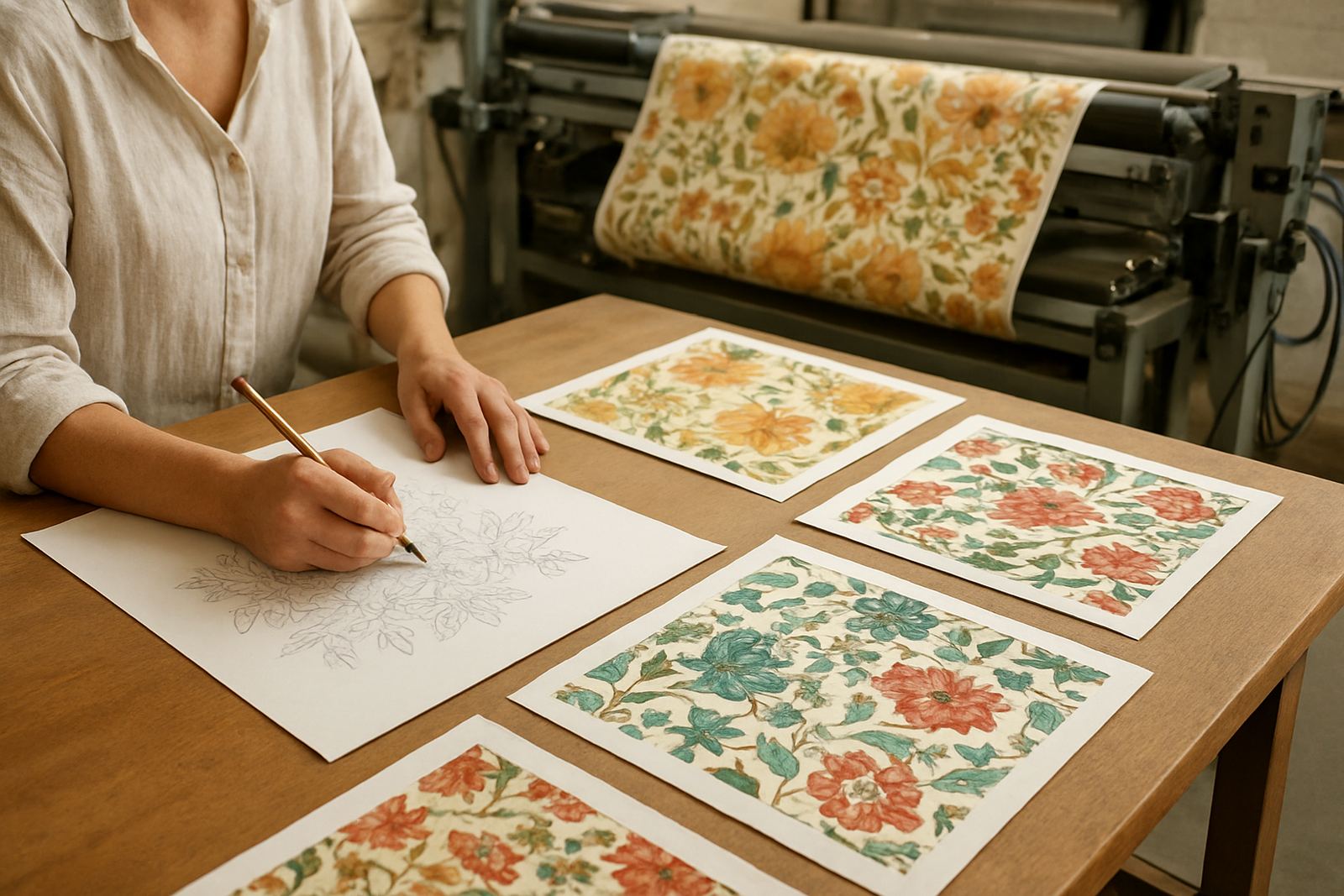
The first decision is not the motif, it is the repeat size. A small repeat can suit dress fabric or tight furnishing prints, while a larger repeat often works better for feature curtains, scatter cushions and statement upholstery. If the repeat is too small, the print can feel busy. If it is too large, the pattern may disappear once it is cut into panels or covered by seams.
In practice, the repeat must suit the width of the fabric and the final use. A curtain panel in a Mowbray townhouse does not need the same repeat planning as a promotional flag for a Salt River event. Measure the design block properly, then check how it tiles across the full width. That is where many patterns fail, not in the artwork itself but at the join.
At our Ndabeni base we often see designs that look fine on a computer screen, then shift by a few millimetres once printed on cloth. It is worth checking the repeat early, before a full run of metres is printed.
Keep the joins invisible in motion
A repeat should guide the eye naturally from one panel to the next. For curtains and long runs of fabric, the join must not create a hard stop. This is especially important for large rooms, hotel interiors and showroom work where several metres are seen in one line. A pattern with clean directional flow will hang better and read as one finished surface.
Pay close attention to where leaves, stripes, borders and text elements meet the edge. If a flower is cut in half at the seam or a stripe lands off-centre, the eye catches it immediately. That is why repeat pattern setup is more than pressing copy and paste. It needs careful checking, sometimes over a few test lengths.
- Place key motif points away from the edge of the repeat box.
- Use enough background space so the pattern can breathe.
- Check diagonal movement as well as straight horizontal and vertical joins.
- View the design at real size, not only zoomed in on a screen.
Match colour to the cloth and the room
Colour behaves differently on each fabric type. What looks crisp on a sample file may print slightly softer on a textured base, and warmer on a coated or heavier cloth. If the design is going into home décor, the colour also has to work with wall paint, flooring and natural light. Cape Town light can be sharp in summer, while coastal humidity can make certain finishes behave differently in storage and handling.
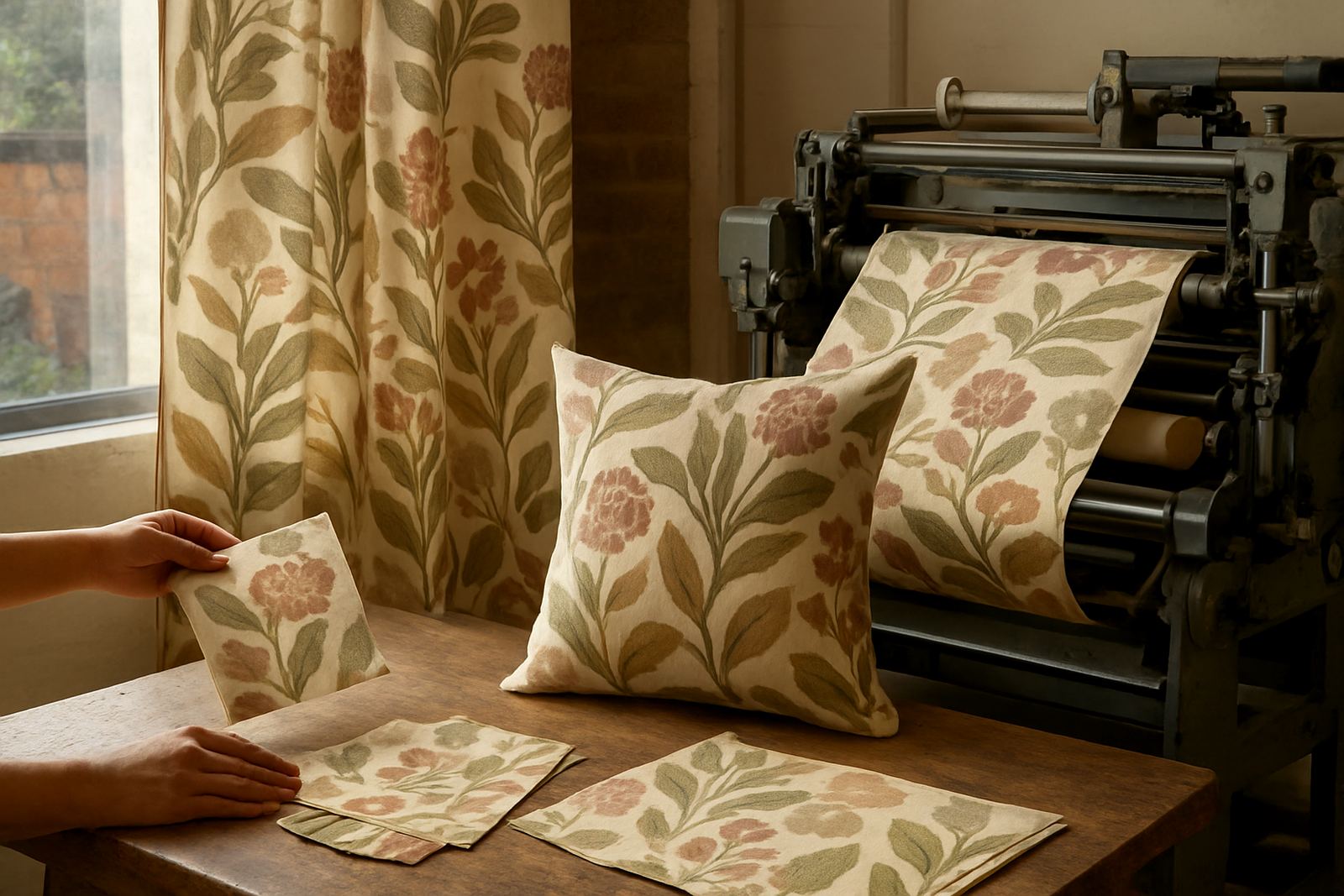
Colour matching is best handled before the full print run. A strike-off sample gives a proper view of tone, density and contrast. If a client in Observatory wants a muted botanical repeat for linen curtains, for example, the greens may need one adjustment for a calm morning look and another for evening light. Small changes can make the difference between a fabric that feels balanced and one that feels too heavy.
It is also important to think about practical use. A repeat for upholstery should not rely on pale detail alone, because wear and cleaning can flatten it over time. For flags or display fabric, stronger contrast usually reads better at distance.
Build repeats for the real application, not only the artwork
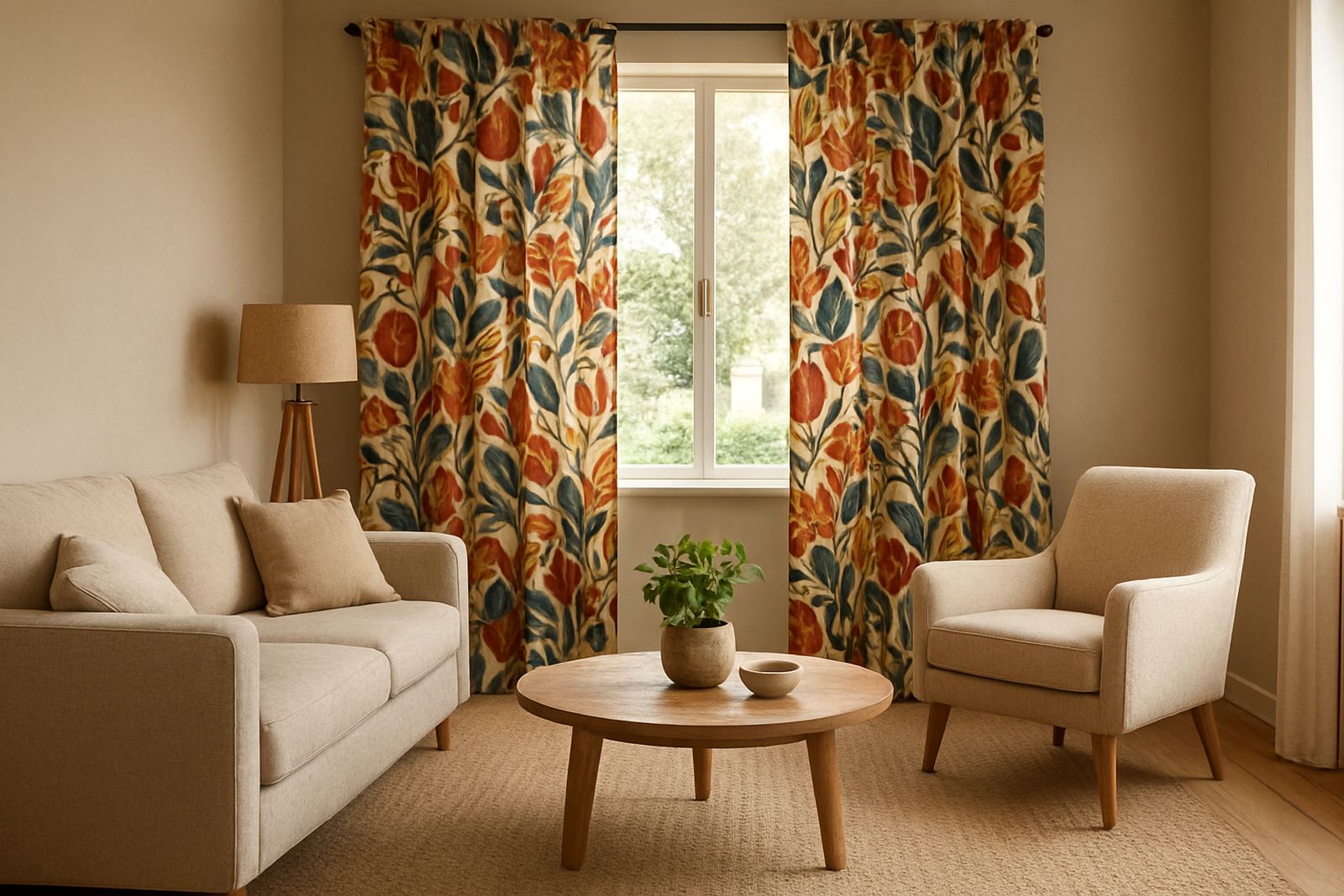
The best repeat patterns are planned around how the cloth will be used after printing. Curtains need pattern flow across long vertical drops. Upholstery needs enough visual rhythm to survive cushions, arms and corners. Fabric by the metre needs flexibility so tailors can cut across the design without losing the main feature. When the use is clear from the start, the repeat can be set up properly.
For businesses ordering bulk print runs, it helps to decide whether the design must align across multiple metres or simply repeat cleanly within each section. A café in Woodstock may need fabric for seat covers and napery, while a retailer in Century City may need the same pattern in smaller cuts for product samples. Those are very different print requirements, even if the artwork starts from the same idea.
- Choose a scale that fits the final item.
- Think about where the design will be cut after printing.
- Leave margin space so hems and seams do not destroy the motif.
- Ask whether the repeat must match across multiple panels or only within each cut length.
Check files before the first metre is printed
File checking is not a formality. It is where the repeat gets tested for gaps, overlaps, colour shifts and broken edges. A repeat that is slightly off can still look acceptable on screen but will show faults once several metres are laid out. This is one of the main reasons a pattern needs to be reviewed in print layout before production begins.
Good file prep includes clear image resolution, consistent edge alignment and a repeat box that closes properly. If you are working from hand-drawn artwork, scanned artwork or layered digital art, make sure the transitions are clean. One missing pixel on a tile edge can create a line that runs through the whole fabric length. That sort of issue is easy to miss if the design is only viewed at a small size.
A short run first is often the safest way to proceed, especially when the design will be used for customer-facing products. A strike-off can save costly reprints, and it gives everyone a chance to agree on the final colour and scale before the full job goes ahead.
A local example from Ndabeni to nationwide delivery
Consider a small interior project in Cape Town. A client in Montague Gardens wants custom curtains for a reception area and a matching upholstery print for occasional chairs. The repeat must be calm enough for a professional space, but still carry enough character to stand out. In that case, the pattern may need a medium repeat with restrained colour and a clear directional flow so the curtains hang neatly and the chairs do not feel overworked.
Once the repeat is approved, the production side matters just as much. Fabric has to be printed, checked, finished and packed properly before courier collection. For clients outside Cape Town, that means the repeat must be stable enough to survive transport and easy to work with when it arrives. A pattern that repeats cleanly across fabric lengths makes life easier for cutters, makers and installers from Durban to Bloemfontein.
That is the value of careful repeat planning. It is not only about design appeal, it is about making the fabric useful when it gets to site. If the pattern works at the sample stage, it will save time later.
When to ask for help with repeat pattern setup
Some repeats are simple enough to set up in-house. Others need a second set of eyes. If the design includes borders, layered artwork, fine line work or multiple colourways, it is worth getting support with the setup before printing. The same goes for jobs where the fabric will be used in several ways, such as curtains, garments and display pieces from one design family.
At Fabric Printers Studio, repeat pattern setup sits alongside colour matching, strike-off sampling, bulk print runs and finishing, so the artwork is checked with the final use in mind. That kind of practical review helps avoid problems once the fabric is cut, hemmed or couriered. For local clients in Ndabeni, Woodstock, Salt River, Observatory, Montague Gardens and Century City, it also means easier collection and quicker turnaround. For nationwide orders, it gives the pattern the best chance of arriving ready for use.
If you are designing a repeat and want it to flow cleanly across the cloth, start with scale, check the joins, test the colour and print a sample. That process is slower at the beginning, but it usually saves time in the end.