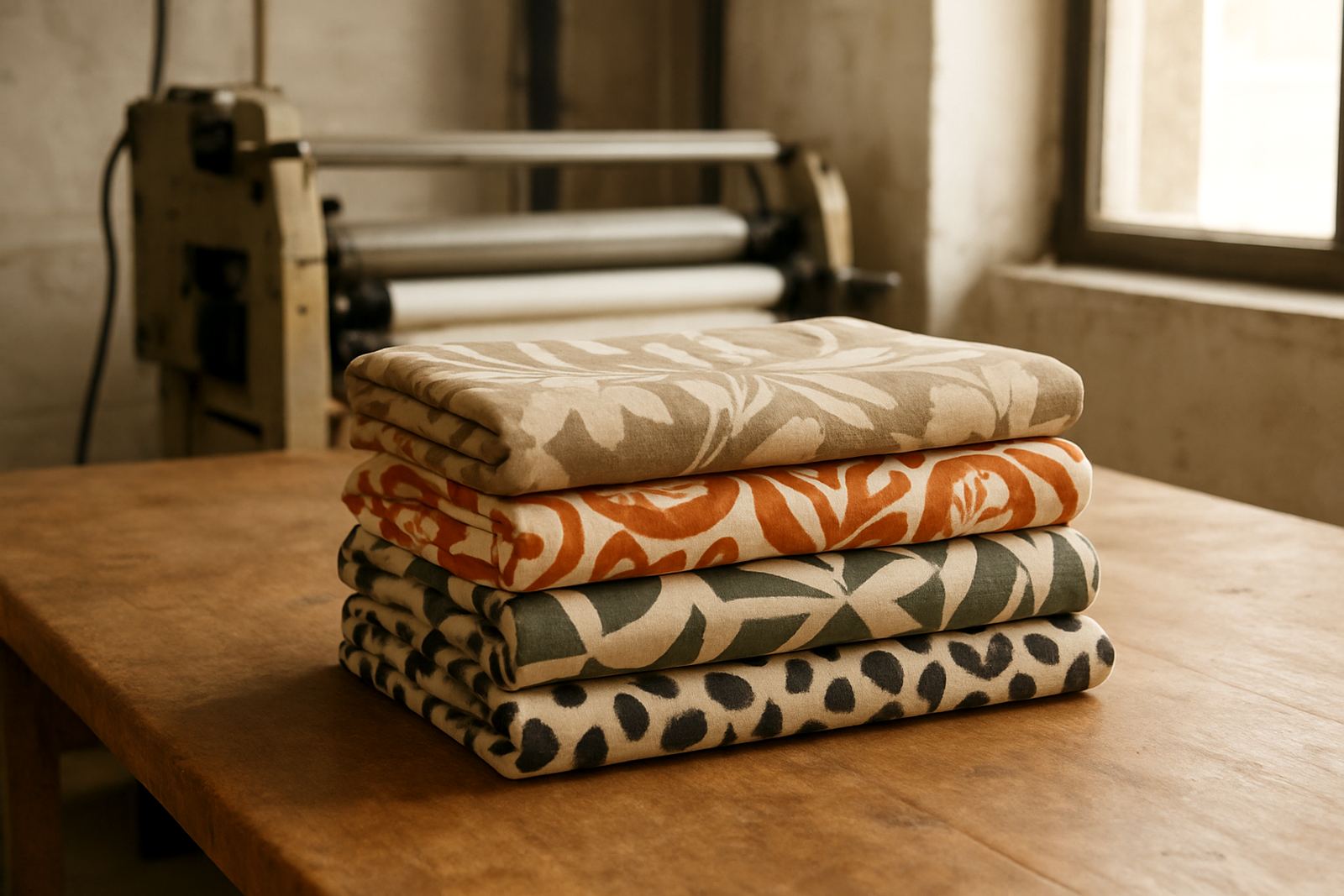
Why motif scale changes the whole result
A print can look strong on screen and then fall flat once it is stretched across curtains or cut into cushions. The reason is scale: small motifs repeat quietly and often work best where the eye gets close, while larger motifs need space to breathe and can lose impact if they are crowded by seams, pleats or narrow panels.
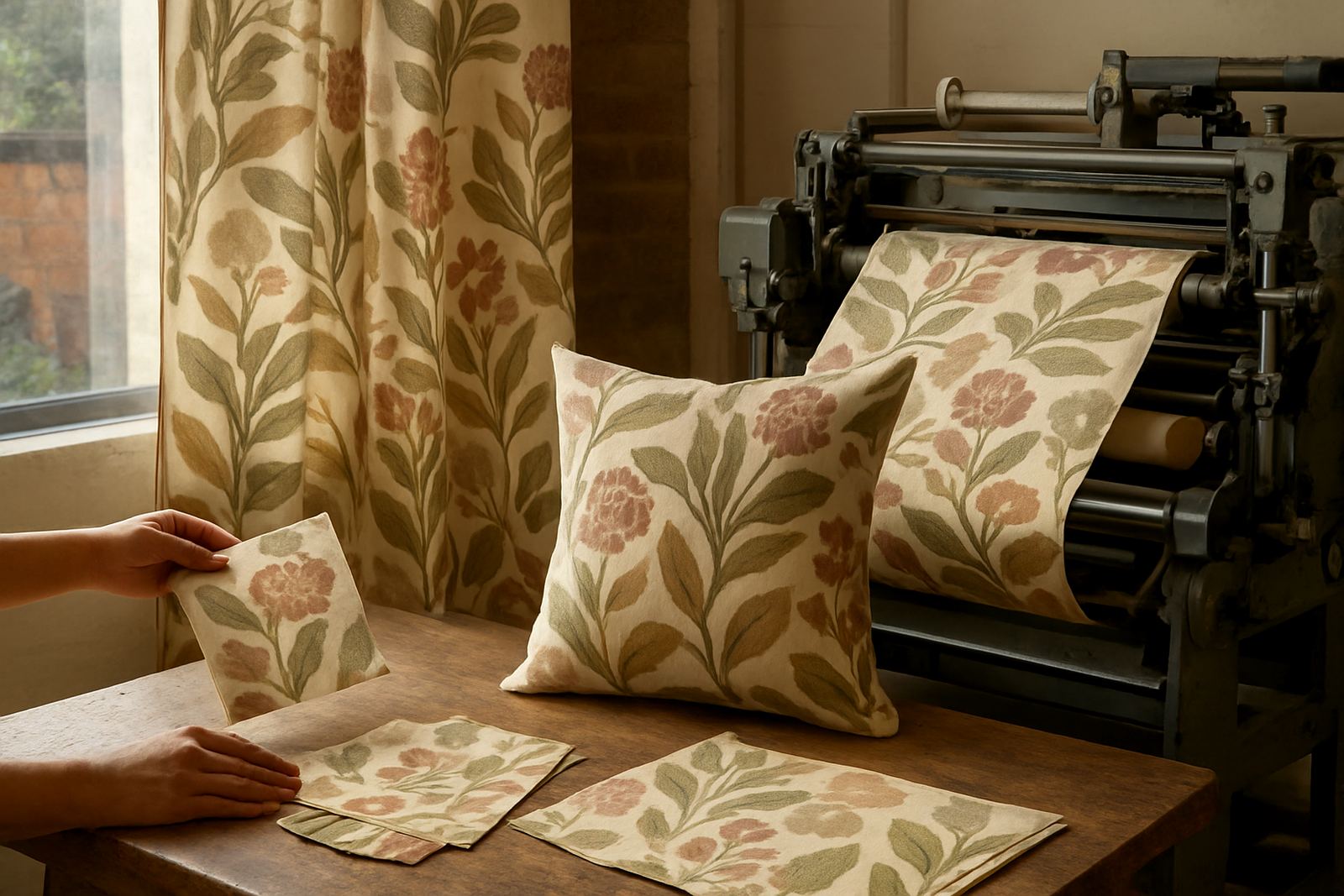
In our Ndabeni studio we see this every week. A customer may bring a bold floral for upholstery and want the same file on sheer curtains, but the two uses behave very differently. The upholstery has a fixed shape and wears hard, while curtains move, fold and catch the light. The motif needs to suit the movement, not just the artwork.
For businesses ordering fabric by the metre or bulk print runs, scale also affects consistency. A small repeat can hide joins better on long lengths, but a large repeat gives a more noticeable rhythm across a room or display. The right choice depends on where the eye lands first, and how far back people stand.
Small repeats for clothing, trims and close-up detail
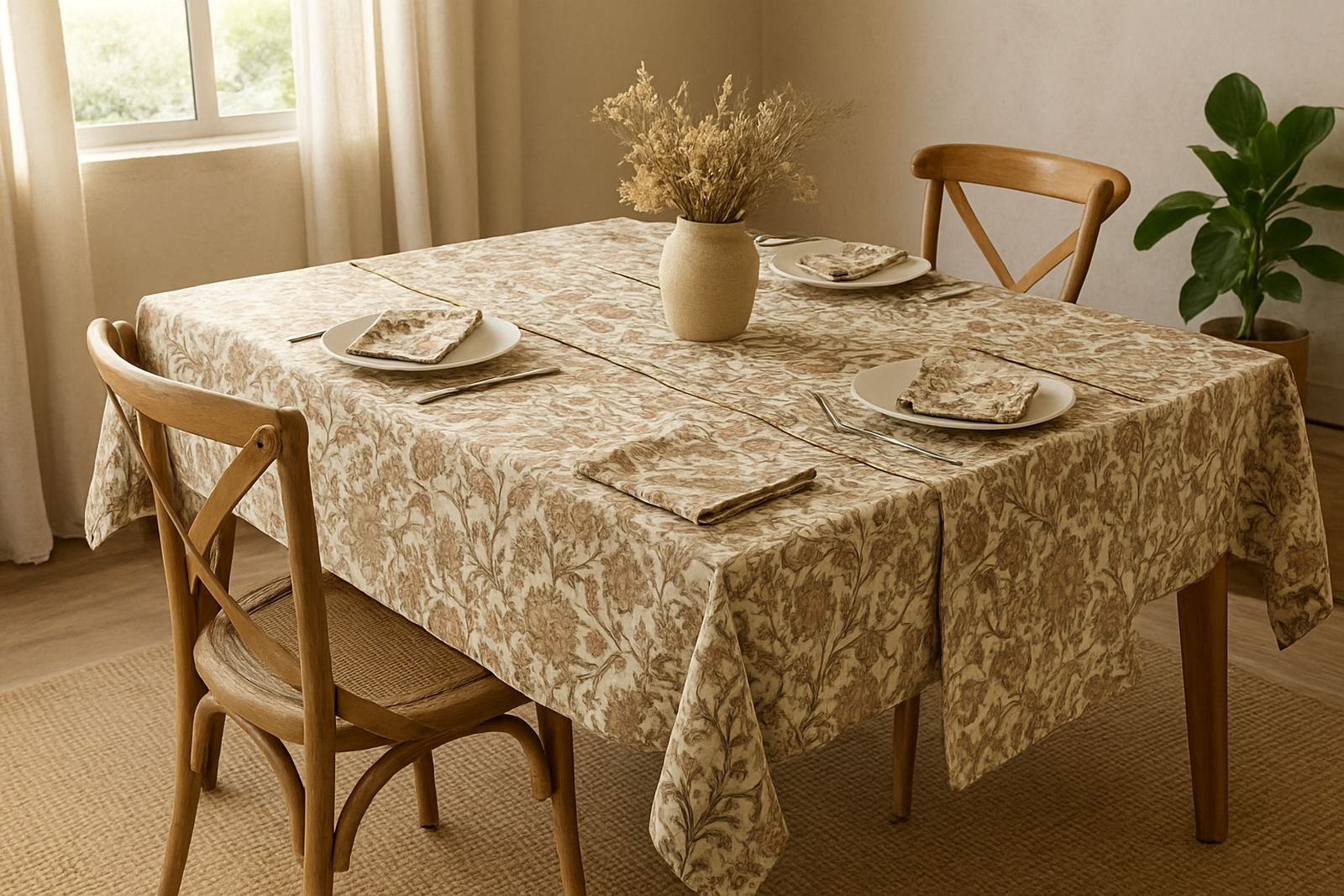
Small motifs suit garments, linings, scatter cushions, table runners and items that people hold in their hands. They also help when a client wants a neat visual texture rather than a loud statement. If a pattern has fine linework or a lot of detail, keeping the repeat smaller usually protects the look better. A design that is too large can feel chopped once it is cut into panels or pattern pieces.
For fashion items and promotional pieces, small repeats also give more flexibility with cutting. You can place pattern pieces with less waste, and the design still reads well even when a hem, pocket or seam removes part of the repeat. That said, tiny details must be printed cleanly, or the image can turn muddy and lose definition.
- Best for shirts, dresses and linings
- Good for cushions, napkins and small homeware
- Useful where cuts and seams break the surface often
- Helps detailed artwork stay readable from close range
Large-scale prints that hold attention at a distance
Large motifs work when the product needs to be seen from across a room or street. Flags, feature curtains, stage backdrops and retail displays all benefit from artwork that reads quickly. In these cases, a design with bigger forms and fewer tiny details usually performs better. A large leaf, stripe or geometric block is easier to register than a busy all-over repeat.
But large-scale artwork needs enough surface area. If the motif is oversized for the item, the important parts may be lost in a seam or only partly visible. We often advise clients to think about the final view first. A flag outside a shop in Century City needs impact at 20 metres, while a curtain in a Woodstock flat needs to look balanced from 2 metres and still sit nicely when drawn back.
Local conditions matter too. In Cape Town, strong coastal light can flatten soft colour, so bigger shapes and clearer contrast often help the print stay visible. On darker fabrics or in shade, a very fine pattern can disappear quicker than expected.
Curtains, upholstery and why the room size matters
Home fabrics need a pattern scale that matches the room. In a compact Observatory apartment, a huge repeat can make the space feel crowded. In a larger lounge in Pinelands or a double-volume reception area in Montague Gardens, the same print may finally have room to settle. The rule is simple: the bigger the item and the viewing distance, the more generous the motif can be.
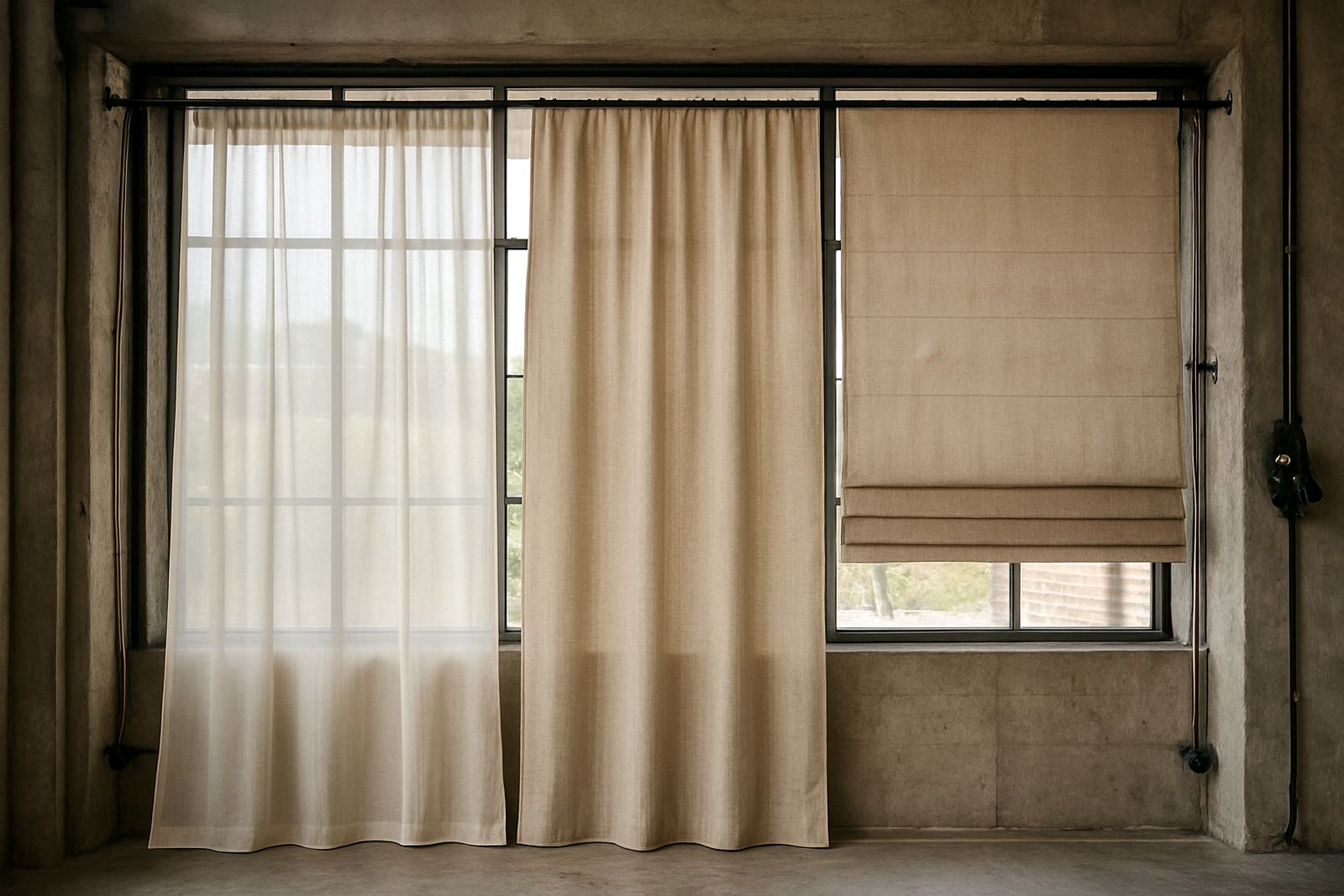
For curtains, the hanging style matters as much as the design. Pencil pleats, wave headings and eyelets all change how much of the repeat is visible. Upholstery is different again because cushions, armrests and seat backs break the image into smaller sections. A large-scale design can still work, but only if the key shapes are placed with the cut layout in mind, not just the original file.
- Measure the full finished width, not just one panel
- Check how the repeat lands on hems and seams
- Allow for folds, pleats and furniture edges
- Ask for a strike-off if the artwork is large or detailed
Matching scale to fabric type and print method
Different fabrics show scale differently. A smooth base gives sharper edges and suits fine repeats, while textured or heavier cloth softens the detail a bit. That is why a motif that looks crisp on a sample can appear slightly heavier on upholstery or a heavier curtain fabric. It is not a fault, it is the nature of the cloth.
For print-on-demand work, file quality matters as well. If the image is too small, enlarging it can expose pixelation. If it is too busy, the design may become noisy when repeated. We do file checking before print because a repeat that is mathematically correct can still feel wrong once it is scaled to the product. This is where a clean repeat pattern setup saves time and waste.
Colour matching is also tied to scale. Bigger motifs need stronger colour contrast to keep their shape. Smaller repeats can rely on subtle shifts in tone, but if the contrast is too low, the design may blur into the background. That balance is especially important for clients ordering multiple items across a range, from metreage to finished curtains.
A simple Cape Town example from concept to finished order
A Salt River client recently came to us with a bold protea-inspired print for a small hospitality space. They wanted upholstery on occasional chairs, curtains for a window wall and a few fabric panels for wall dressing. The first draft had a large repeat that worked well on the wall panels, but the chair seats chopped up the main flower. It looked fine on paper, not on the furniture.
We adjusted the repeat so the flowers sat a little closer together and reduced the key motif size for the seating. The curtain fabric kept more open spacing so the room still had breathing room. That change meant one design family could move across three products without fighting itself. It also kept the packing and courier side straightforward, because the client could order different cuts from the same artwork file.
That is the practical side of scale. It is not about making the print bigger for the sake of it. It is about matching the motif to how people will actually use and see the fabric, whether it is heading to Ndabeni, Observatory or courier fabric going to Durban, Gqeberha or upcountry.
When to choose a strike-off before you print in bulk
If the artwork is new, detailed or being used on more than one product, a strike-off sample is worth the wait. It gives you a real view of the motif at size, on the chosen fabric, with the colours and repeat in place. That is far safer than approving a file from a monitor and hoping it behaves the same on cloth.
A strike-off is especially useful when the brief includes:
- Custom curtains with a visible repeat across wide widths
- Upholstery where seams will interrupt the motif
- Flags that need strong impact from a distance
- Fabric sourcing for mixed products in one order
- Bulk print runs where a small error would multiply quickly
Once the scale is right, the rest of the job becomes easier. The design reads properly, the colours sit where they should, and the fabric does the work it was meant to do.