Start with the room, not the pattern
Before you pick a design, look at what the room needs from the window. A north facing living room in Cape Town may need glare control in the afternoon, while a street-facing flat in Woodstock may need privacy first and foremost. In a bedroom, you may want darker mornings and quieter evenings. In a kitchen or braai room, you may want easy cleaning and a fabric that can cope with steam and everyday use.
Printed fabric gives you a lot of choice, but the base fabric matters just as much as the artwork. A light sheer will behave very differently to a heavier woven cloth. If the window gets strong sun, the wrong base can fade quicker or let too much heat through. If the room already feels dark, a heavy print can make it smaller than it needs to feel.
Printed sheers for soft light and daytime privacy
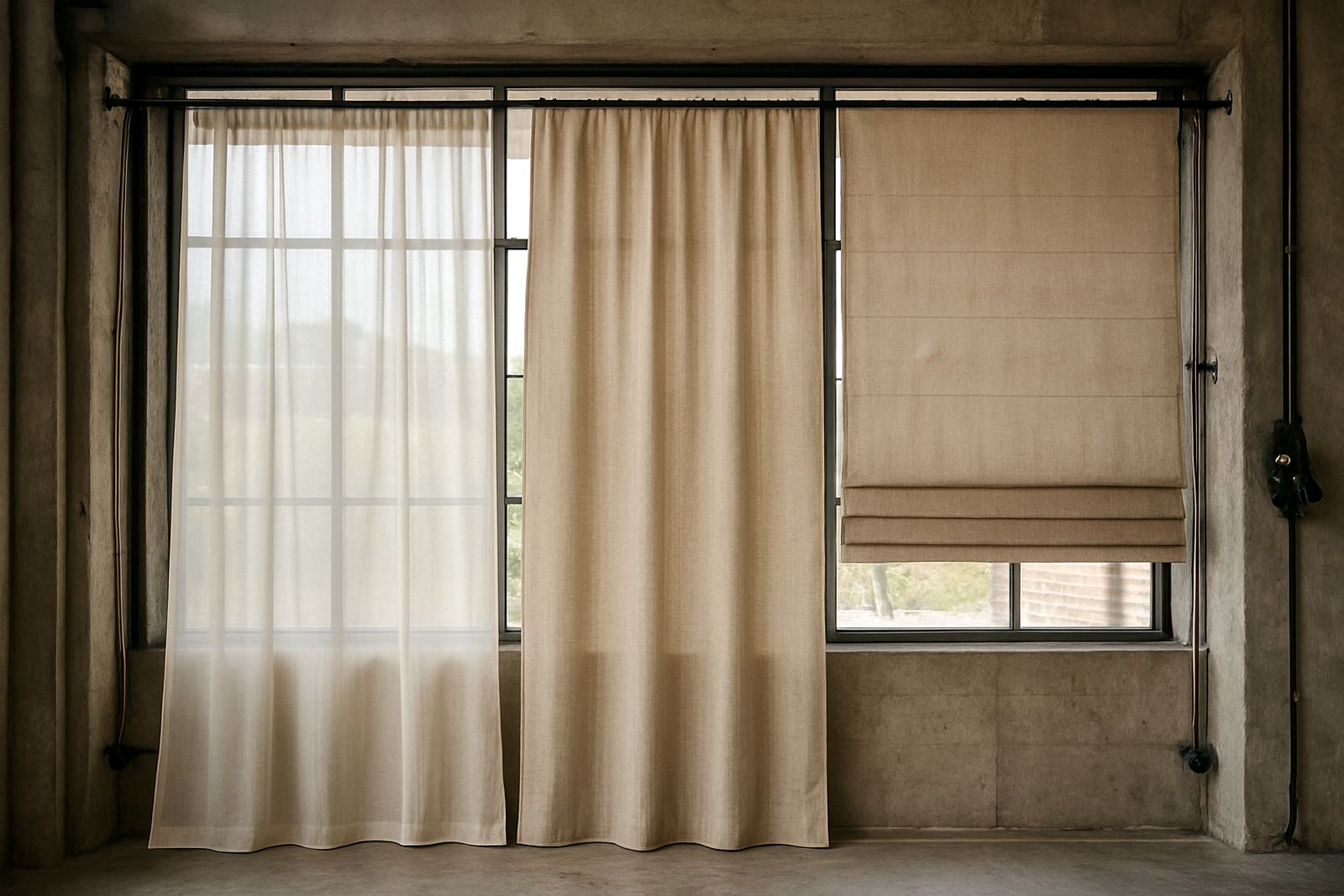
Printed sheers work well where you want daylight to stay in the room but not leave the window completely bare. They are useful in open-plan living spaces, dining rooms and front rooms that face neighbours or a pavement. The print shows more softly on a sheer base, so it suits designs that do not need to shout. Think tone, texture and movement rather than dense blocks of colour.
In a coastal home, sheers can also help soften the glare that comes off bright summer light. They are not a blackout option, so if you need full privacy at night they usually need to be paired with another layer. That second layer can be a lined curtain or a blind, depending on the look you want.
- Best for daylight rooms where you still want privacy in the day
- Works well behind heavier drapes for a layered finish
- Needs careful measuring so hems hang neatly and do not snag
- Good for soft prints, lighter colours and airy interiors
Lined curtains when heat, glare and privacy matter most
Lined curtains are the practical choice when the room needs more control. The lining helps block some light, improves privacy and can reduce the harshness of summer sun. In a bedroom or media room, that can make a real difference. In Cape Town homes with large glass doors, lined curtains can also help the room feel less exposed in the evening.
They are useful in colder months too. A lined curtain adds a bit more body to the fabric, which helps the curtain hang better and can take the edge off draughts. If the room has air conditioning, the extra layer can help keep temperatures more stable. For rented flats or sectional title homes where you cannot change the windows, curtains are often a straightforward fix that does the job without major alteration.
One point to watch is weight. Heavier curtains need proper tracks, hooks or rods and accurate installation. If the hardware is too light, the curtain will not sit properly and the folds can pull unevenly. That is where measuring and finishing matter just as much as the print itself.
- Better for bedrooms, TV rooms and front windows facing strong sun
- Can help with temperature control and reduce glare
- Needs strong hardware and accurate sewing allowances
- Ideal when you want a fuller, more formal look
Roman blind fabric for neat lines and smaller openings
Roman blinds suit windows where you want a clean finish and less fabric bulk around the sides. They work well above kitchen sinks, in bathrooms with enough clearance, or in smaller rooms where curtains would feel too heavy. The fabric choice here matters because the blind folds into itself, so some prints look better than others when stacked.
A busy pattern can hide the fold lines better than a very plain design. If you want a crisp look, choose a base cloth that holds its shape well. For a softer, tailored result, a mid-weight fabric usually works best. Roman blinds are also popular in offices and consulting rooms where people want privacy without losing the tidy, ordered feel of the space.
If the blind is for a high-use area, ask about stain resistance and the finished edge. Kitchens in Salt River or Observatory may deal with more grease and humidity than a spare room, so a fabric that cleans easily can save time later. The right choice is not only about style, it is about how much upkeep you want to live with.
How fabric choice changes the result
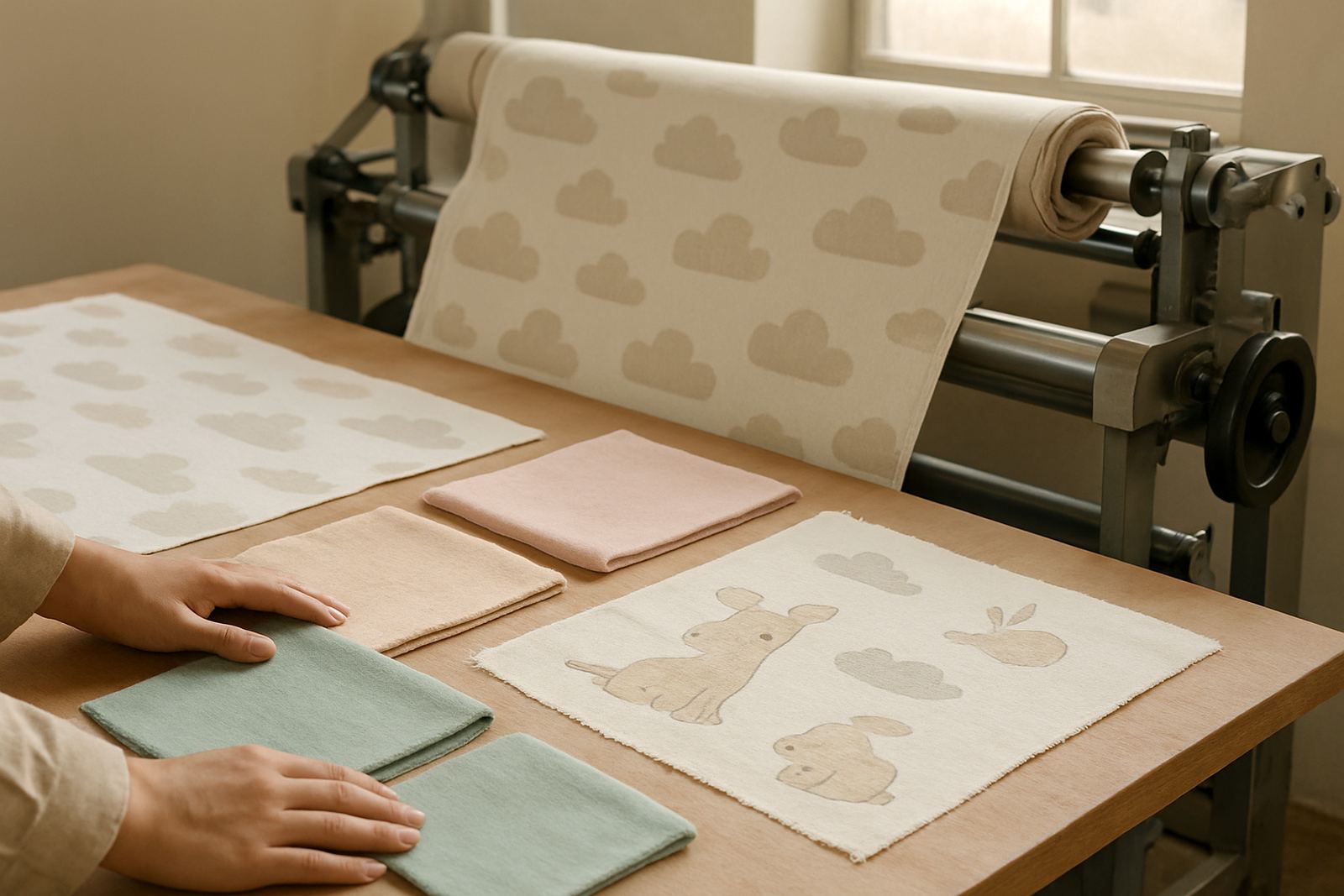
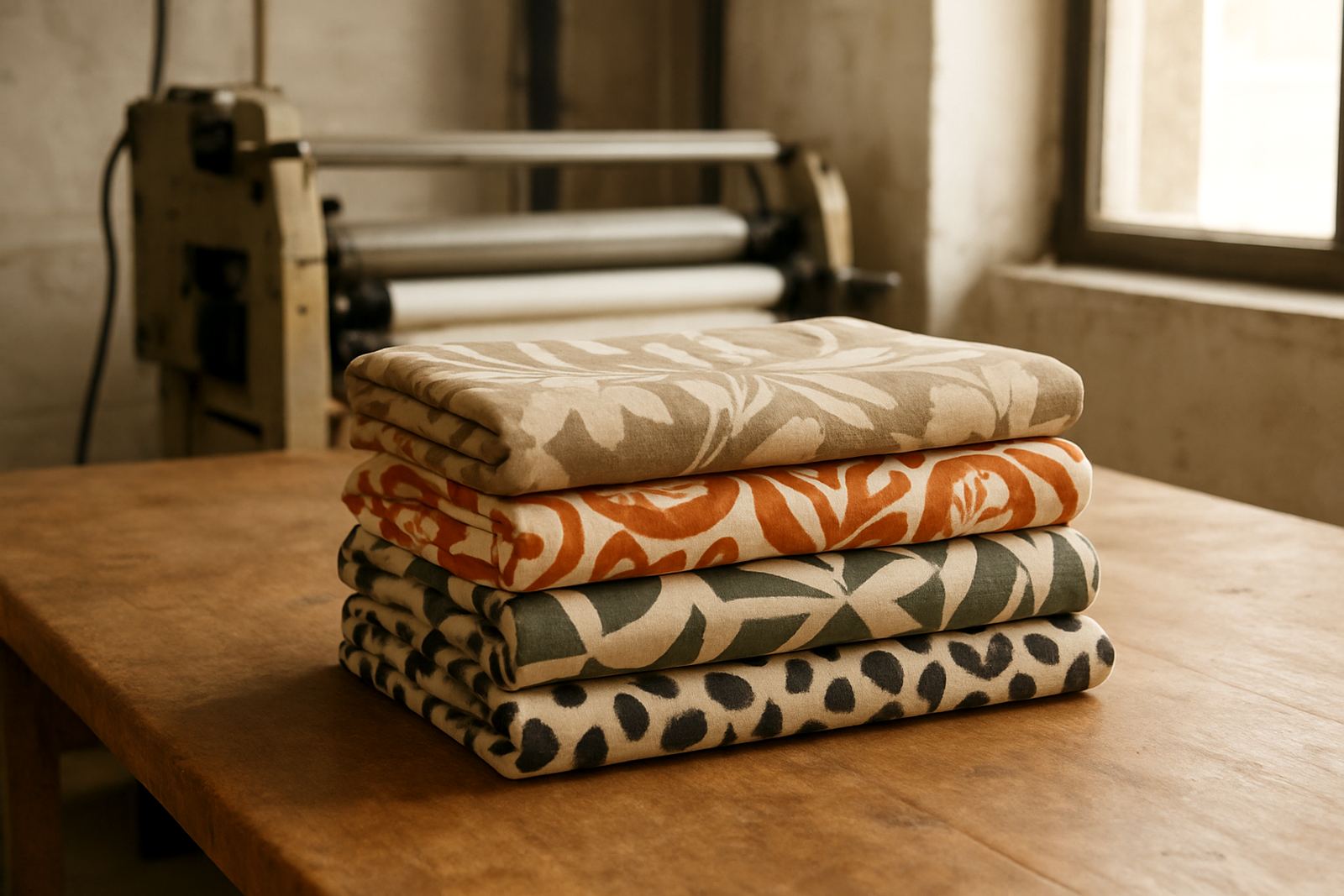
The same print can look completely different on sheer, lined or medium-weight fabric. That is why strike-off sampling is worth it. A sample shows the real colour under local light, which matters in Cape Town where afternoon sun can make blues look brighter and warm neutrals look flatter. It also shows whether the pattern repeats cleanly across the width and whether the fabric suits the drop you need.
If you are ordering for a whole home, keep the room function in mind before you fall in love with a design. A fabric that works in a guest room may not work in a sunny lounge. A cloth that looks beautiful as a curtain may not fold neatly as a blind. The best result usually comes from matching the print to the base and the window size, not just the image on screen.
- Sheers soften light but need layering for night privacy
- Lined curtains improve privacy, heat control and drape
- Roman blinds suit smaller windows and tidy finishes
- Sample testing helps avoid colour surprises and weak repeats
A local Cape Town example that shows the difference
A client in Ndabeni might need fabric for a street-facing lounge, a sunny bedroom and a small study all in the same apartment. In that case, the lounge could take a printed sheer with a plain lining curtain behind it, the bedroom could use a fully lined curtain for better sleep, and the study could use a Roman blind to keep the window clear for a work table or shelving. The rooms are close together, yet each one has a different job.
That is the practical part of window treatment planning. You are not only choosing a colourway, you are deciding how each room handles light, heat, privacy and daily use. For homes and businesses across Cape Town, from Woodstock clients to Century City offices, the smartest result usually comes from a fabric choice that matches the window size, sun exposure and how often the room is used. It saves rework and keeps the finish looking neat for longer.
What to ask before you place the order
Before you confirm anything, check the measurements, the heading style and how the fabric will be finished. Ask whether the print needs repeat pattern setup, whether the cloth should be hemmed, and whether a sample can be checked first. If the order is going nationwide by courier, it helps to confirm packing details too, especially for longer curtain lengths that need to arrive crease-free.
For practical use, think about washability, fade resistance and where the fabric will hang. South African homes deal with bright light, humidity and load-shedding, so window coverings often do more than one job. A well chosen fabric should look good and hold up to everyday use, not just the first week after it is installed.
There is no single best option for every window. Sheers, lined curtains and Roman blind fabrics each solve a different problem. Once you know what the room needs, the choice becomes much simpler.