Start with where the flag will be used
The first question is simple: will the flag hang indoors, stand in a foyer, fly outside on a pole, or be used at events that move from one venue to another? Indoor flags can focus more on finish and appearance because they are not fighting constant wind and weather. Outdoor flags need the right fabric weight, a stable print surface and stitching that can take repeated strain at the sleeve or eyelets.
In Cape Town, a flag used outside in Ndabeni, Woodstock or near the harbour faces stronger gusts and salty air than a flag used in a boardroom or showroom. That matters. A light fabric may look good on day one, but if it is too thin for the setting it can fray early or lose shape. On the other hand, a heavier cloth can hang neatly indoors, but may not fly properly on a pole if the wind is weak.
- Indoor flags: aim for neat drape, clean print detail and a good finish on edges.
- Outdoor flags: choose fabric that handles wind, UV and moisture better.
- Portable event flags: balance light weight with enough strength for repeated setup.
- Long-term site flags: ask for a fabric and finish suited to daily exposure.
Know how the fabric should move in the wind
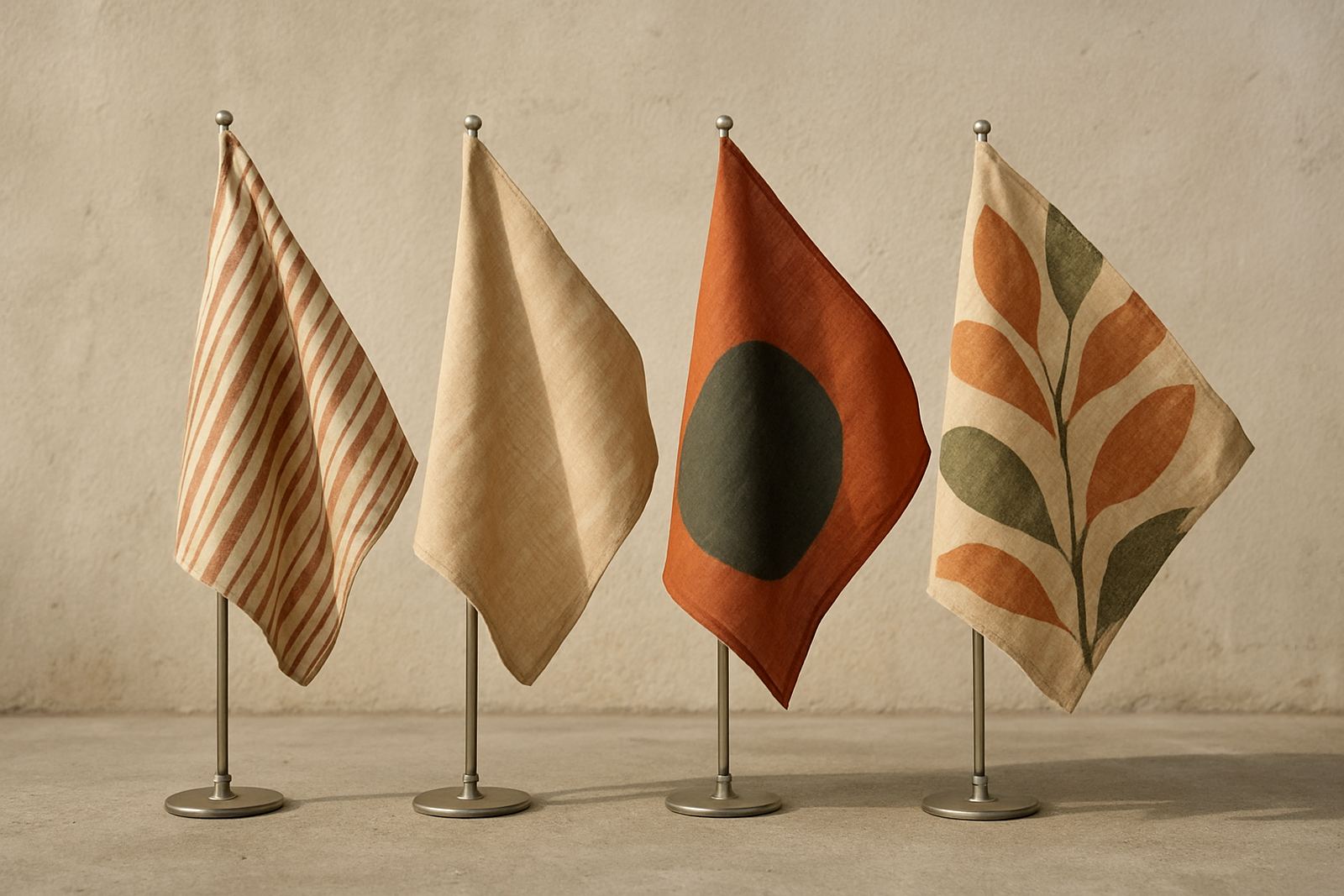
Flag fabric must move. If it is too stiff it can look flat and lifeless. If it is too soft or too light for the print and the size, it may wrap around the pole, crease badly or tear sooner at stress points. Good flag material should release wind cleanly while still showing the design clearly from a distance.
For tall outdoor flags, a lighter cloth is often preferred because it flies better in low to moderate wind. For indoor hanging banners or ceremonial flags, a slightly more substantial cloth can give a better fall and a cleaner finish at the hem. The right choice depends on how often the flag is raised, lowered and packed away.
- Light fabrics fly well and are easier to transport.
- Medium-weight fabrics can hold form better for indoor display.
- Very stiff cloths are usually not ideal for flags because they do not move naturally.
- Always consider the flag size, because a larger flag puts more strain on the fabric.
Print sharpness, colour and how the design reads from afar
Flags are usually read at a distance, not from arm's length. That means the print must stay clear when the fabric is in motion. Fine lines, small text and very detailed artwork can become hard to read once the wind starts pulling the flag around. Bold logos, simple shapes and strong contrast often work better.
The fabric itself also affects colour. Some cloth takes ink in a way that gives strong, bright results. Others soften the look slightly. If a client wants a bright corporate blue, a clean red or a very precise brand shade, colour matching and strike-off sampling are worth doing before a bulk run. This is especially helpful when flags must match other printed items at a launch or sports event.
- Use bold artwork for outdoor flags.
- Ask for colour matching if the flag must align with existing branding.
- Check the design on a strike-off before printing a larger batch.
- Allow for movement, because the flag will never stay perfectly flat.
Check weather, sun exposure and coastal conditions
South African weather can be hard on flags. Strong sun fades colour over time, while coastal humidity can affect drying and storage. In places like Cape Town, Table View, Muizenberg and areas near the industrial side of Ndabeni, flags often face both wind and moisture. If the fabric stays damp after rain or morning mist, mildew and odour can become a problem, especially if it is packed away before it is fully dry.
Outdoor flags should be stored clean and dry. That sounds basic, but many flags fail because they are folded wet and left in a storeroom. If the flag will be used often, ask about fabric that copes better with regular washing, fast turnaround and repeated hanging. For long-term site use, a practical replacement plan is better than trying to stretch one flag far beyond its life.
- Sun exposure affects print life, so outdoor flags may need replacing sooner than indoor ones.
- Coastal humidity can slow drying and increase storage problems.
- Heavy rain and wind can strain seams, hems and pole pockets.
- Plan for maintenance, washing and replacement before the first install.
Finishing details matter more than many people think
The fabric is only part of the job. A flag can print well and still fail if the finish is weak. The edge treatment, hem, stitch type and pole pocket all affect how long the flag lasts. For outdoor use, the top corner and hoist side usually take the most strain. If those areas are not finished properly, the flag can rip long before the printed area looks worn.
Different uses need different finishes. A display flag for a reception area may only need clean hemming, while a large outdoor flag might need reinforced edges, stronger stitching and a secure sleeve. For municipal or event use, check the mounting method early so there are no surprises on site. If the pole, frame or bracket is already installed, the flag should be made to fit that setup properly.
- Ask how the flag will be hemmed and stitched.
- Reinforced edges help with wind exposure.
- Pole pockets, eyelets or sleeves should match the mounting method.
- Make sure the final size allows for accurate fitting on site.
A practical Cape Town example for flag selection
Consider a business in Montague Gardens ordering flags for a showroom opening in Century City and another set for an outdoor pavement promotion in Woodstock. The indoor flags can be made for presentation, with a cleaner drape and sharper detail. The outdoor version needs a fabric that flies well in the wind and a finish that can handle daily setup, takedown and transport in courier bags.
This is where local print planning helps. The same artwork may be used, but the fabric and finish should change according to the job. A single design can be adapted for a reception pole flag, a roadside banner flag or a promotion at a trade counter. That kind of tailoring saves money and gives a better result than forcing one cloth to do every job.
If you are unsure, ask for advice before printing. It is easier to select the right fabric at the start than to replace a flag after a week of sun and wind. For clients across South Africa, the best choice is the one that suits the location, the mounting method and the expected wear, not just the printed image.