Why hotel rooms need more than plain fabric
In accommodation, textiles do more than fill a room. They control light, soften acoustics, carry your brand colours and help a space feel cared for. A plain room can be fine for one night, but a room with well chosen curtains, scatter cushions and upholstered pieces feels planned, not random.
For guest rooms in Cape Town, Durban or Pretoria, fabric also has to cope with real use. Curtains get opened and closed all day, cushion covers get handled by cleaners, and upholstered headboards must hold up to regular turning and vacuuming. If you use custom printed fabric from the start, you can match the room scheme properly and avoid the patchwork look that comes from buying pieces one by one.
Fabric Printers Studio in Ndabeni works with hotels, guest houses and short stay accommodation across South Africa, supplying printed fabric by the metre, finished curtains and other room textile items for both small batches and bulk runs. That makes it easier to keep one standard across a full property, even when rooms are phased in over time.
Where printed fabric makes the biggest difference
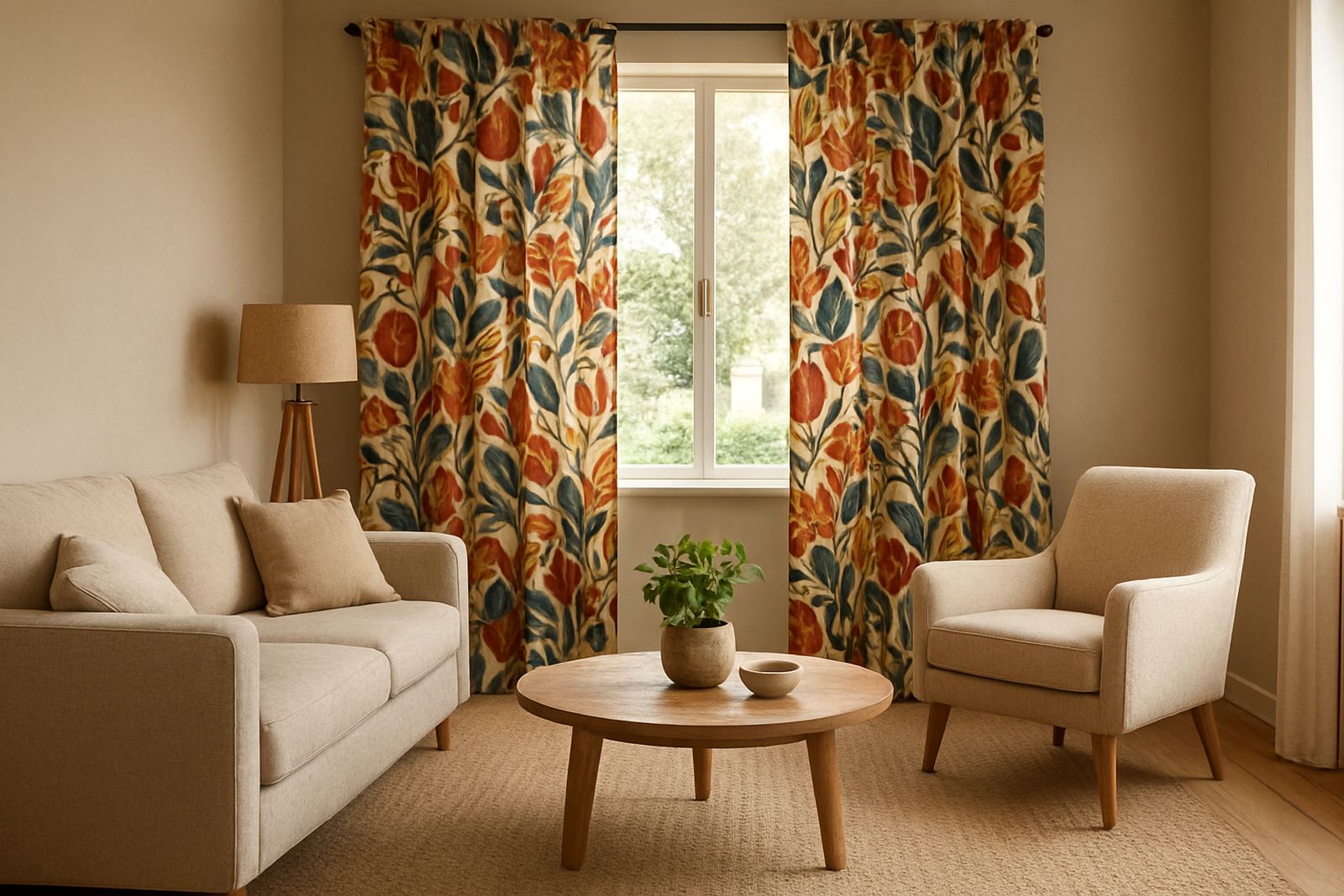
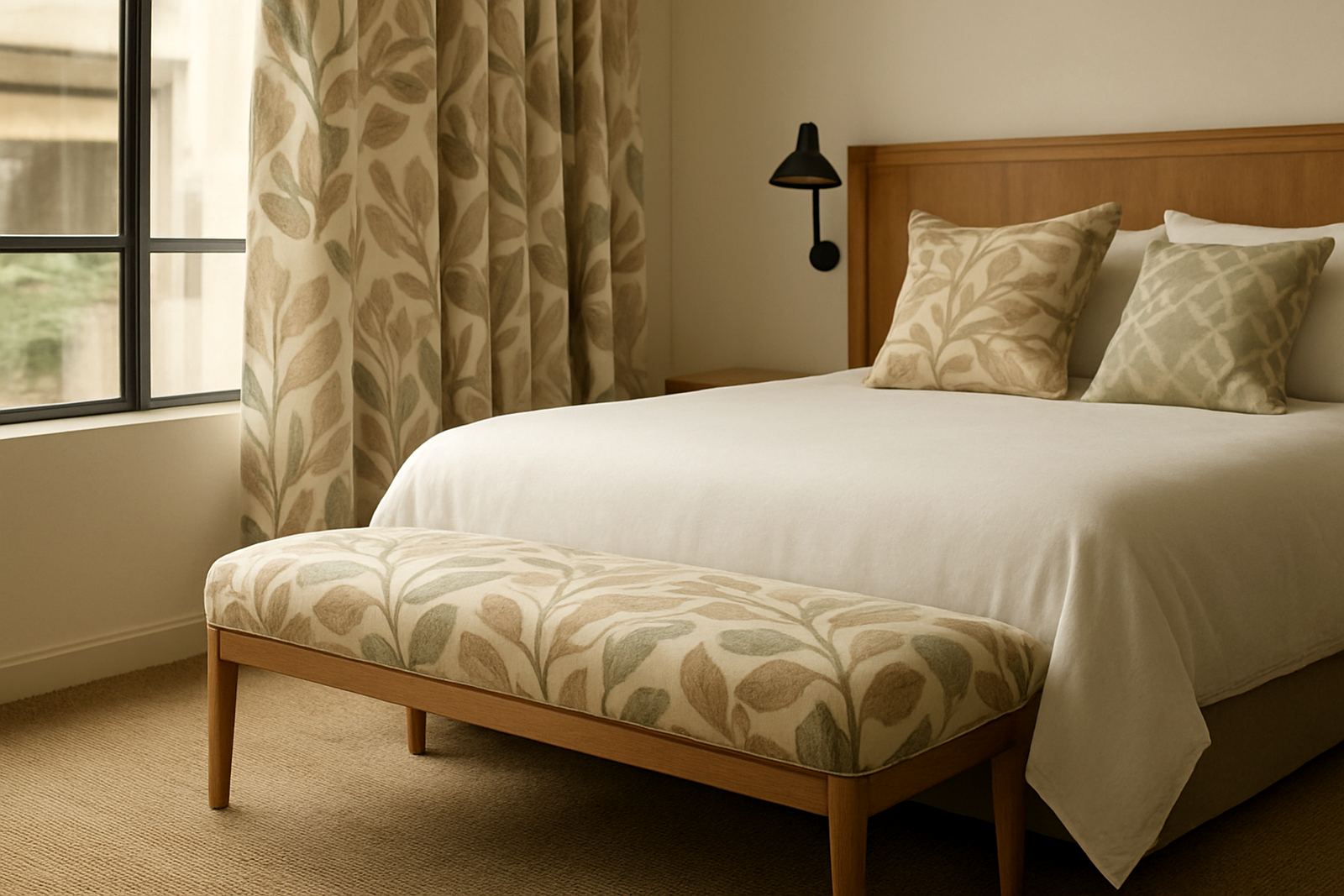
The best place to use custom print is usually where guests notice texture and colour up close. In hotel rooms, that often means curtains, scatter cushions, headboards, valances, bench covers and occasional chair upholstery. These are the pieces that can tie the room together without a full renovation.
- Blackout or lined curtains for sleeping comfort and street light control
- Scatter cushions that match the room palette and can be replaced easily
- Upholstered headboards with wipeable fabric that suits daily cleaning
- Ottomans and bench seats for practical extra surface and luggage support
- Fabric panels or accents for suites, family rooms and premium units
If your property is near the coast, lighter colours and the right fabric base can help rooms feel cooler, while in older buildings with smaller windows darker or denser designs can hide wear better. In hospitality, that kind of detail matters more than people think.
Design choices that work in South African accommodation
Hotel textiles should support the room, not fight it. A printed leaf pattern may suit a lodge in the winelands, while a geometric or tonal design can work better in a city business hotel. The key is to keep the design readable from a distance and calm enough for repeated use. Guests should remember the room as comfortable, not busy.
In Cape Town, many accommodation owners want something that feels local without becoming cliché. A subtle coastal palette, a nod to indigenous plant forms or a restrained line pattern can give the room a sense of place. For a Ndabeni based studio, it is common to print for lodges, aparthotels and boutique stays in Woodstock, Salt River, Century City and surrounding areas, where the brief is usually practical first and decorative second.
- Choose 2 or 3 main colours and repeat them across all room textiles
- Keep bold artwork for feature cushions or small accent panels only
- Use darker grounds for high traffic guest rooms and lighter tones for suites
- Test the design under warm white lighting before approving the final run
Sampling matters before a full print run
In hospitality, a sample can save you from a costly mistake. A colour that looks warm on screen may print cooler on fabric, and a fine pattern can disappear once it is made up into curtains or bedding accents. That is why strike-off sampling is worth the time, especially when the rooms already have fixed flooring, tile and paint colours.
For hotel room textiles, sampling should also check how the cloth behaves after sewing and hanging. Does it crease badly, does the print stay clear near seams, and does the base fabric drape well enough for the intended use? These questions matter whether you are fitting six rooms or sixty.
Fabric Printers Studio can assist with colour matching, file checking and strike-off sampling before production begins. If your property has a strong brand colour, or if a designer has supplied artwork, the aim is to get the shade right before bulk printing starts, not after the curtains are already at site.
Practical fabric picks for cleaning, durability and climate
Accommodation textiles need to stand up to laundry, vacuuming and plenty of handling. In coastal areas like Cape Town, humidity can also affect how fabric feels and hangs. In hotter inland towns, fade resistance and easy maintenance become bigger concerns. The right base cloth and finish makes a real difference over a year or two of room use.
For guest rooms, it is usually best to separate decorative items from high wear items. Scatter cushions can carry a more detailed print, while headboards and seating should use a more durable cloth with a cleaner repeat. If linen and upholstery are being ordered together, matching the wash and care instructions to your housekeeping team’s routine is worth doing upfront.
- Use lined or blockout curtain systems where sleep quality is a priority
- Choose upholstery fabrics that can handle regular cleaning without losing colour
- Keep removable covers on cushions and smaller accent pieces
- Ask about fabric sourcing if you need a specific feel or performance level
A Cape Town example: fitting out a small hotel in stages
A practical example is a small hotel in Cape Town adding a new wing while keeping the older rooms open. Instead of changing everything at once, the owner can start with printed curtains and cushions in the busiest rooms, then move to headboards and seating as each phase is budgeted. That approach keeps cash flow manageable and still gives the property a clear visual standard.
From a Ndabeni base, supply to nearby areas like Woodstock, Observatory and Montague Gardens can move quickly, while courier delivery handles the rest of the country. For a hotel or guest house, this matters when a room is turning over and a replacement cushion cover or extra metre of fabric is needed fast. Clear packing and dispatch help avoid delays when opening dates are fixed.
It also helps to print extra metres from the same batch for repairs later. Colours can vary between runs, so ordering a little more now is often cheaper than trying to match a discontinued lot later on.
What to brief your fabric supplier before ordering
Good hotel textiles start with a clear brief. The supplier needs to know where the fabric will be used, how often it will be cleaned and whether it must match existing finishes. A small guest house in Sea Point and a 40 room business hotel in Century City will not have the same requirements, so the order should not be treated the same either.
Before you place the order, send a proper room list and measurements. If curtains need hemming, if cushions need finishing, or if you require packing by room number, say so early. That avoids hold ups and keeps the install side simpler for your team.
- Room count and the number of items per room
- Measurements for curtains, cushions, headboards or bench seats
- Preferred colours, reference files or existing decor samples
- Any fire safety, cleaning or municipal accommodation requirements
- Delivery site, timeline and whether courier or local collection is needed
When textiles are planned properly, they do not just decorate a room. They make the stay feel more considered, and that can be the difference between a decent review and a repeat booking.
}],